
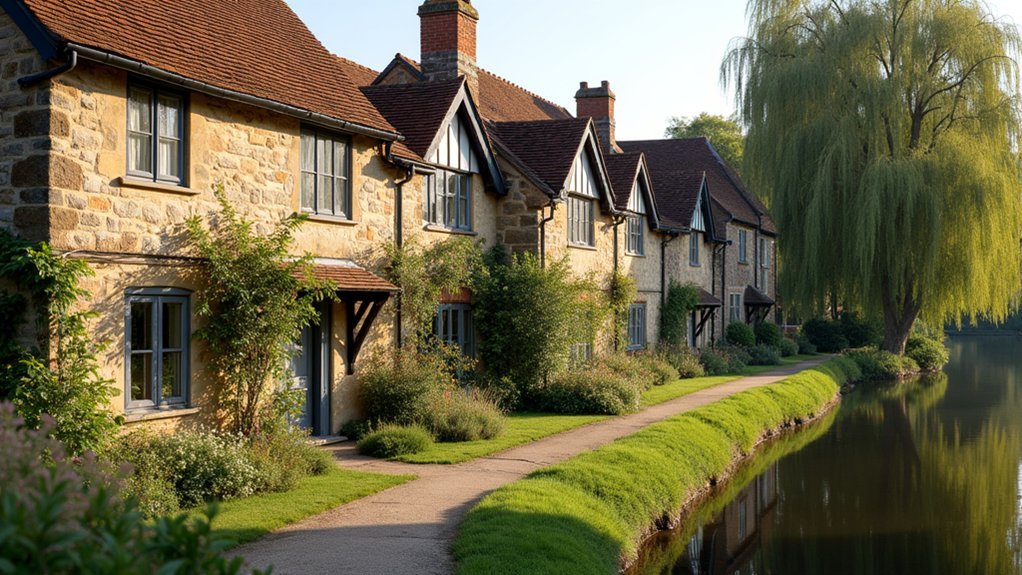
You restore a historic riverside cottage sympathetically by surveying moisture routes, tide splash zones, timber decay, mortar washout, and movement, then mapping cracks and drainage faults. You confirm listing, conservation, and flood-risk constraints, and build a statement of significance from historic records. You repair like-for-like: hand-rake and repoint in matched lime, splice timbers, and pin or re-bed stone on lime. You add reversible flood boards, drains, and vapour-open insulation; there’s more ahead on detailing and upkeep.
Key Takeaways
- Survey moisture paths, salt damage, timber decay, and movement patterns, noting tide marks, splash zones, and drainage failures typical of riverside exposure.
- Confirm heritage and flood designations, riparian constraints, and required consents, then compile a statement of significance to guide sympathetic interventions.
- Repair with compatible lime mortars and breathable finishes, avoiding cement and impermeable coatings that trap moisture and accelerate masonry deterioration.
- Preserve original fabric through in-situ timber and stone repairs—splicing, pinning, and lime bedding—replacing only elements beyond practical repair.
- Improve flood resilience reversibly using demountable barriers, non-return valves, discreet drainage, and vapour-open insulation and services routed above flood lines.
Survey the Riverside Cottage: Damp, Decay, Movement
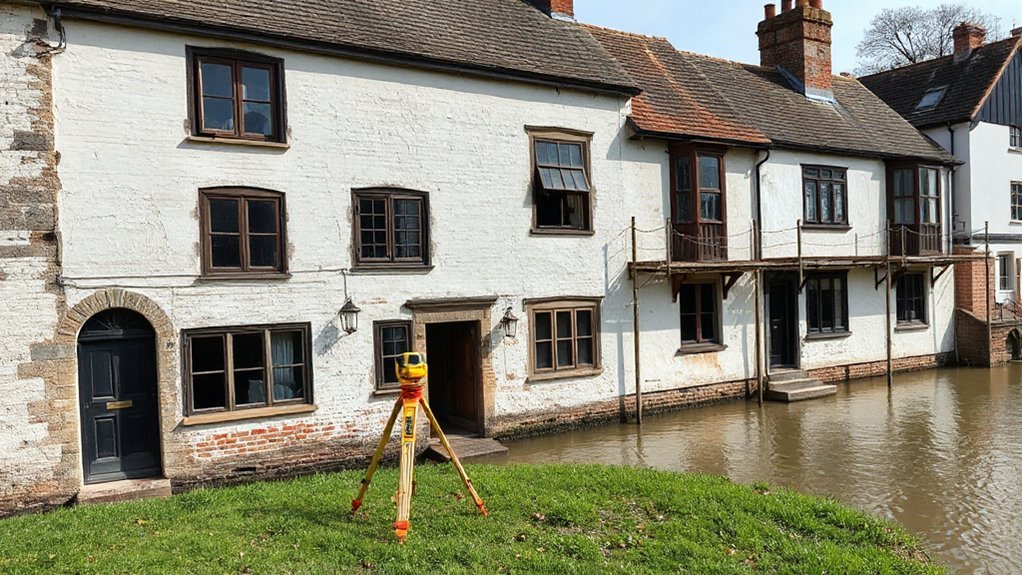
Before you specify repairs, you need to survey the cottage methodically for moisture pathways, timber and masonry decay, and any signs of structural movement, because riverside exposure amplifies wetting cycles and salt deposition.
Start at ground level: map tide marks, splash zones, and bridging at thresholds. Probe skirtings, sole plates, and joist ends for softening, beetle flight holes, and fungal mycelium. Check lime pointing for washout, friable mortar, and salt crystallisation that spalls brick or stone faces.
Record crack patterns, out-of-plumb walls, and racked openings; correlate with settlement near the bank. Inspect gutters, downpipes, and French drains for overflow and backfall.
Note Riverbank flora against walls, and protect Wildlife habitats when setting access and sampling points.
Check Consents and Research the Cottage’s History
Because riverside cottages often sit within layered designations and vulnerable settings, you’ll need to confirm what consents apply and then build a defensible history of the building before you propose any intervention. Start by checking listing status, conservation area controls, flood-risk constraints, riparian ownership, and any Article 4 Direction.
Map which works need Legal permissions: listed building consent, planning permission, scheduled monument consent, and environmental permits where watercourses are affected.
Then assemble Historical documentation: historic maps, tithe plans, estate records, census entries, aerial imagery, and prior applications.
Compare this evidence with fabric observations to phase the cottage’s evolution, identify significance, and flag later intrusions.
Record findings in a statement of significance and a short heritage impact summary you can submit with proposals.
Repair Lime, Timber, and Stone: Don’t Replace
You’ll prioritize lime mortar repairs first, because compatible, vapour-permeable joints protect historic masonry and avoid trapping damp behind hard cement.
You’ll rake out failed mortar by hand, repoint with a matched lime mix, and retain as much original fabric as you can.
You’ll mend timber and stone with splices, dutchman repairs, and pinning/indent work, replacing only what’s structurally beyond repair.
Prioritize Lime Mortar Repairs
Although modern cement can seem like a quick fix, historic riverside cottages typically perform best when you prioritize lime mortar repairs and retain original timber and stone.
For Historic preservation, you’ll match the original binder type, aggregate grading, and color so new work reads as existing fabric, not a patch.
Check joint profiles, erosion patterns, and salts before you specify mixes, because riverside walls often suffer cyclic wetting and crystallization pressure.
Rake out failed cement carefully to avoid edge spalling, then repoint with a breathable lime mortar that manages moisture and accommodates slight movement.
Control suction by pre-wetting masonry, compact in thin lifts, and finish to the historic profile.
Material compatibility matters: choose NHL or lime putty based on exposure, curing conditions, and masonry strength.
Mend Timber And Stone
Once the lime joints can breathe again, focus on the cottage’s other working materials—timber frames, lintels, and the riverside stonework—and repair them in place rather than swapping them out.
Probe oak posts and sills with an awl, map decay, then splice in matching heartwood using scarf joints and oak pegs; keep original tool marks to respect Historic craftsmanship.
Treat beetle activity only after you’ve solved moisture ingress, and use boron where needed, not blanket spraying.
For stone, pin cracked blocks with stainless dowels set in lime grout, and re-bed loose units on lime, not cement.
Stitch hairline fractures with limewash and shelter coats.
This is Material preservation: you retain load paths, permeability, and authentic fabric while extending service life.
Choose Flood-Resilience Upgrades for a Riverside Cottage
When floodwater can rise faster than a caretaker can respond, your upgrade strategy has to reduce damage without erasing historic fabric. Start with reversible Flood barriers: demountable door boards, slimline threshold dams, and removable airbrick covers fixed into sacrificial frames, not original masonry. Specify non-staining seals and test-fit to distorted openings typical of aged joinery.
Then improve site hydraulics. Regrade paths to shed water away from footings, and add discreet French drains where archaeology allows. Upgrade Drainage systems by clearing historic outfalls, installing rodding access, and fitting non-return valves on foul and surface lines.
Use permeable gravel margins to slow runoff, and protect cellars with sump pits and backup pumps set in service voids, keeping original floors intact.
Upgrade Insulation and Services Without Trapping Damp
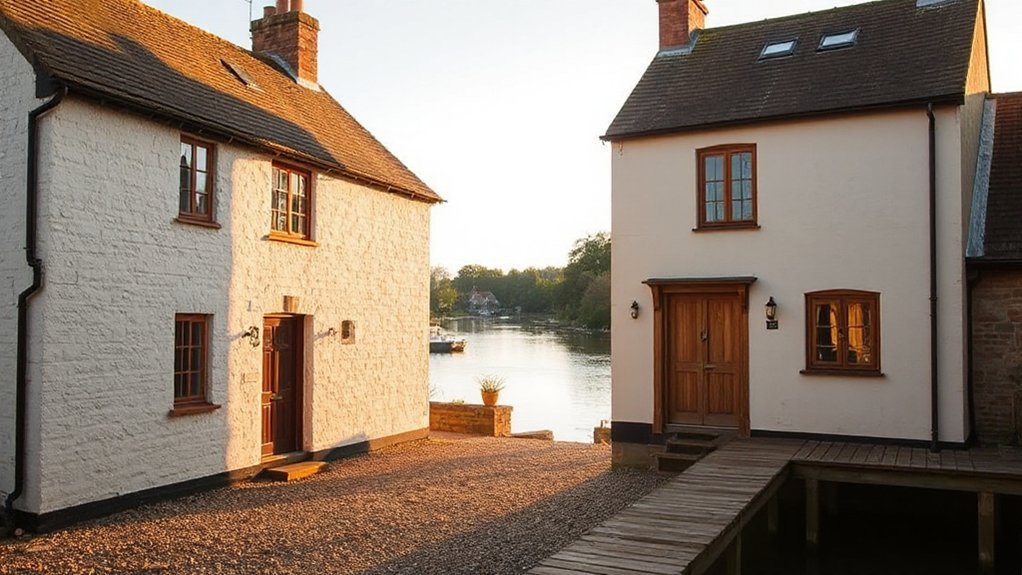
Flood barriers and improved drainage reduce how much water reaches the building, but you’ll still need insulation and upgraded services that let a riverside cottage dry predictably after wetting events.
Prioritise vapour-open assemblies: woodfibre or lime-hemp internal insulation with capillary-active adhesive, and lime plaster finishes instead of gypsum. Keep timber frames and solid masonry warm while allowing inward drying; avoid foil-faced boards and impermeable membranes that trap interstitial moisture.
Re-route electrics and data in surface-mounted conduits above likely flood lines, and specify corrosion-resistant back boxes and IP-rated accessories. Raise sockets, isolate circuits, and use demountable skirtings so you can inspect wall bases after saturation.
Choose breathable Historic paint and moisture-tolerant Interior decor—washable limewash, clay paints, and removable floor coverings—so finishes don’t blister and salts can migrate harmlessly.
Maintain Your Riverside Cottage: Checks by Season
Although you can’t control river levels, you can control how your cottage responds by running a seasonal inspection routine that targets moisture pathways before they damage historic fabric.
In spring, clear gutters, rodding eyes, and French drains, and check lime mortar for friable joints after freeze-thaw.
In summer, monitor subfloor humidity, confirm air bricks are unobstructed, and trim Riverfront landscaping away from walls to maintain splash zones.
In autumn, test rainwater goods for leaks, reseal lead flashings where appropriate, and clear leaf litter from gullies and threshold drains.
In winter, inspect for condensation at cold bridges, keep background heat steady, and verify sump pumps and non-return valves.
Log findings, photograph defects, and schedule minor repairs early—these Cottage preservation techniques prevent escalating decay.
Frequently Asked Questions
What Insurance Options Cover Heritage Riverside Cottages With Flood Risk?
You’ll need a specialist Heritage building policy with listed-structure reinstatement, plus separate flood insurance or NFIP where available. Add Flood risk management endorsements: elevation, resilient materials, debris removal, loss-of-rent, and professional fees coverage.
How Much Does a Sympathetic Restoration Typically Cost per Square Metre?
You’ll typically pay £2,500–£5,500 per m² for sympathetic restoration, depending on Historic aesthetics, Material authenticity, specialist trades, surveys, and compliance. You’ll see higher rates where lime, timber repair, and bespoke joinery dominate.
Which Contractors Are Accredited for Traditional Lime and Timber Repairs?
Like Theseus’s thread, you’ll follow accreditation to vetted firms: use the Building Limes Forum register, SPAB’s advice directory, and TrustMark/CHAS. You’ll secure Traditional craftsmanship and Historic preservation through verified lime, timber competencies.
Can I Add an Extension Without Harming the Cottage’s Historic Character?
You can, if you design a Modern extension that’s subservient in scale, uses reversible junctions, and preserves key elevations. You’ll verify Structural integrity via measured survey, foundation assessment, and conservation-led planning approvals before works.
What Grants or Tax Relief Are Available for Restoring Listed Riverside Cottages?
Sure, funding’s famously “easy”: you can pursue heritage conservation grants from Historic England/National Lottery Heritage Fund, plus local authority schemes; you’ll claim VAT relief on approved repairs, and sometimes tax incentives, while safeguarding architectural authenticity, via consent.
Conclusion
You’ve surveyed damp, decay, and movement, secured the right consents, and chosen repair over replacement—repointing in lime, splicing timber, and stitching stone so the cottage keeps its breathability. Now you’ll prioritise flood-resilient details and discreet insulation and services that won’t trap moisture. Maintain it seasonally: clear gullies, check flashings, monitor salts and tide marks. Remember, UKHSA estimates flooding can raise damp and mould risk by up to 50% after an event.