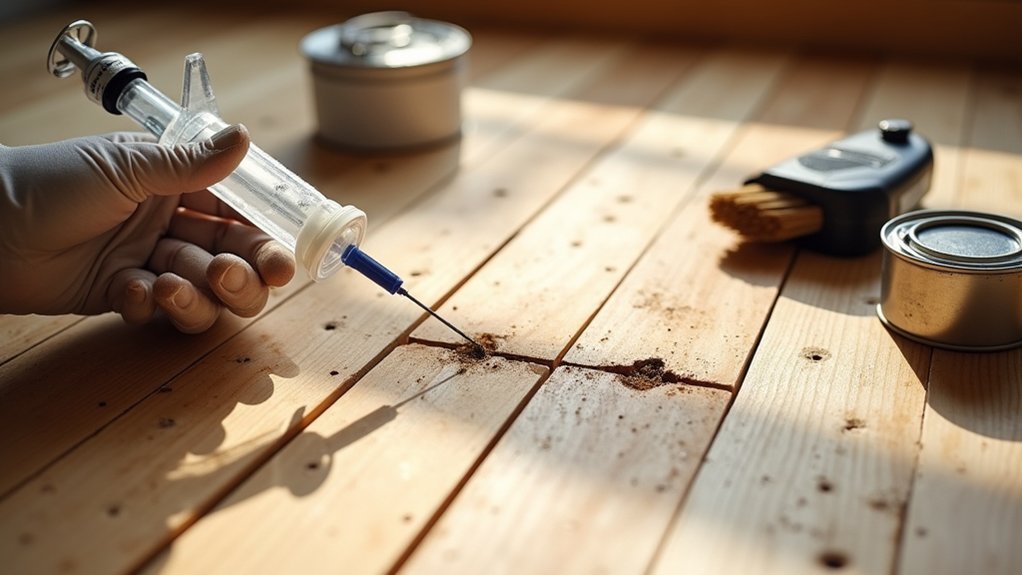
Confirm it’s active by looking for fresh, pale frass and clean-edged holes that refill when brushed. Check urgency by walking for bounce or dips and probing boards and exposed joists for soft, crumbly timber, especially near damp areas. Fix any leaks and improve ventilation first. For small, local attacks, strip finishes, vacuum, then apply a boron or liquid insecticide along the grain to both faces and joist edges. There’s more to help you decide.
Key Takeaways
- Confirm active woodworm by finding fresh pale frass and new clean-edged exit holes that refill after brushing.
- Assess severity by probing boards and nearby joists; treat urgently if timber feels spongy, sagging, or damp is present.
- Fix moisture sources first—repair leaks and improve ventilation—because damp conditions allow reinfestation and attract certain beetles.
- For small, firm areas, vacuum, remove surface finishes, then brush or spray insecticide/boron preservative on all exposed timber faces and edges.
- Monitor monthly for new frass or holes; if activity persists, spreads, or affects multiple rooms, hire a timber specialist.
Woodworm in Floorboards: Signs of Active Attack
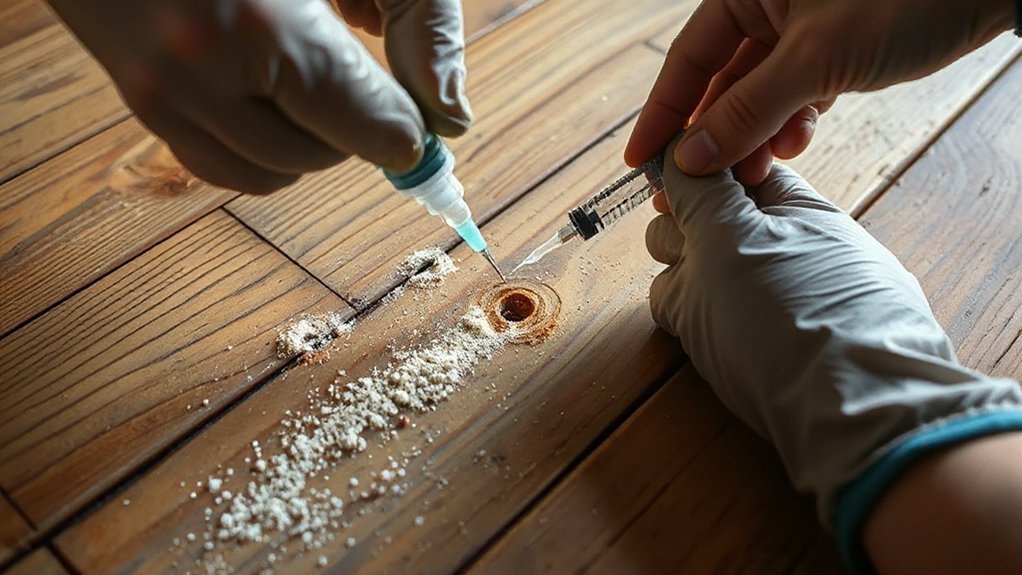
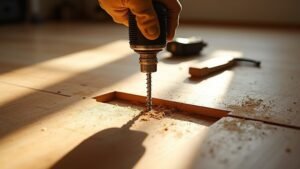
Although old flight holes can linger for years, you need to spot the signs of an active woodworm attack in your floorboards before you treat anything. Look for fresh, pale bore dust (frass) beneath holes or along joist edges; it should feel gritty, not caked. Check for new, clean-edged exit holes and brush the area—active holes refill with frass. Watch for adult beetles at windowsills in spring and early summer, which signals the Woodworm lifecycle is continuing. Probe suspect boards with a bradawl: sound timber resists, but active galleries can leave a thin surface that breaks. Inspect nearby skirting, exposed joists, and Wooden furniture for matching fresh holes, as infestations often overlap. Use a torch and mirror to check underfloor voids too.
How Urgent Is It? Check Strength and Spread
Once you’ve confirmed there’s fresh activity, you need to judge how quickly it’s compromising the floor by checking both strength and how far it’s spread. Walk the room slowly; note bounce, squeaks, or dipping. Probe suspect boards with a bradawl or screwdriver: sound timber resists, but weakened timber crumbles or feels spongy. Check joists at edges, around pipe runs, and under bathrooms where damp accelerates damage.
Map every flight hole and patch of frass, then lift a board (safely) to inspect the underside and adjacent joists. If you find extensive galleries, sudden soft spots, or sagging, treat it as urgent and restrict loading. Remember the woodworm lifecycle can continue unseen, so act early and build prevention strategies: reduce moisture, improve ventilation, and fix leaks promptly.
Which Woodworm Beetle Is It?
Before you choose a treatment, you need to identify which beetle’s doing the damage, because different species favour different timbers and conditions and some require a more specialist approach. Start with beetle identification: note hole size, flight season, and the powder (frass). Common furniture beetle leaves 1–2mm round holes and gritty, lemon-coloured dust in softwood and older joists. House longhorn (mainly South East England) makes larger 6–10mm holes, tunnels in sapwood, and frass feels like pellets. Deathwatch beetle targets damp hardwoods, especially oak; holes are 2–3mm and the frass is bun-shaped. Tie this to the Woodworm lifecycle: larvae do the real damage for years, so fresh frass or new holes matters most.
DIY or Pro Treatment: How to Decide
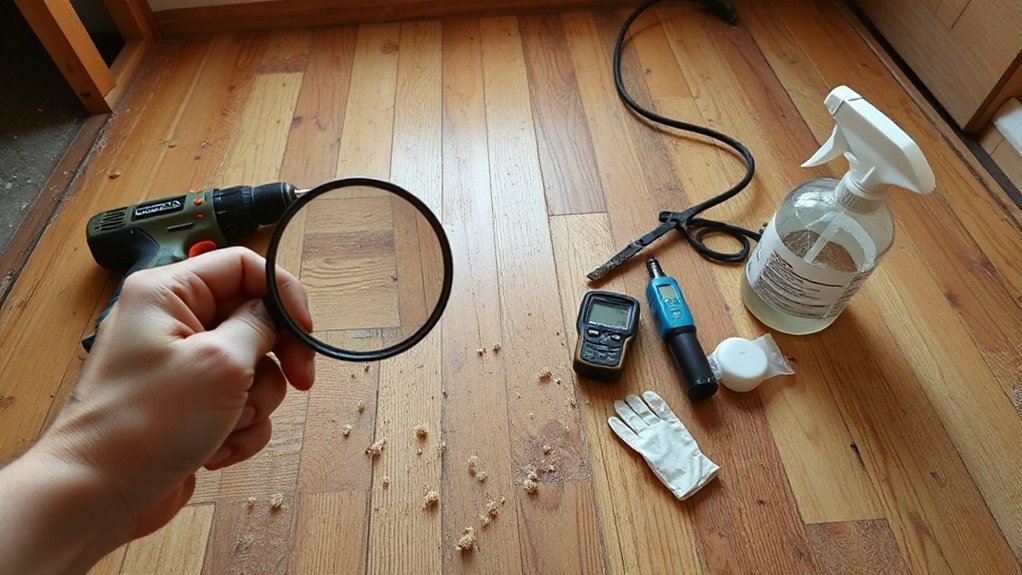
Knowing which beetle you’re dealing with tells you how aggressive the attack is and how far it’s likely spread, which then guides whether you can sensibly handle it yourself or need a professional. If you’ve got a small, localised area with fresh exit holes and firm boards, a DIY treatment can work, provided you follow DIY safety: gloves, eye protection, ventilation, and careful use of biocides. Choose a pro when you see widespread holes across rooms, soft or sagging boards, beetles linked to damp, or any sign the subfloor timbers may be involved. A surveyor or timber treatment firm can confirm extent and moisture issues. Balance professional costs against the risk of missed infestation and repeated treatments. If you’re unsure, get quotes and a written report first.
Prep Floorboards Before Woodworm Treatment
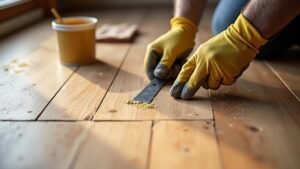
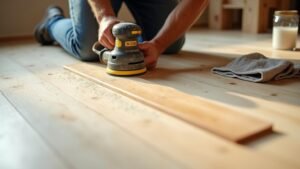
Even if you’re using a strong woodworm fluid, it won’t penetrate properly unless you prep the floorboards so the chemical can reach fresh timber. Start with Floor prep: clear the room, lift rugs, and remove threshold strips. Vacuum thoroughly, including gaps between boards, to remove dust, frass, and grit that blocks access to exit holes. Scrape off paint, wax, or varnish where practical, and degrease any oily patches. If the boards are sealed, focus on sanding surfaces lightly to open the grain and expose bare wood; don’t over-sand tongues and grooves. Punch down protruding nails, and replace split or crumbling boards so you’re not treating rotten timber. Finally, isolate the area and protect adjacent skirting, sockets, and radiators with tape and dust sheets.
Treat Floorboard Woodworm With Liquid Insecticide
Once the boards are clean and opened up, apply a woodworm liquid insecticide so it soaks into the timber and reaches the larvae. Choose a product labelled for common furniture beetle and suitable for your flooring materials, then follow the manufacturer’s dilution and coverage rates. Brush it on along the woodgrain patterns, working it into cracks, knot holes, and around nail lines. Use a low-pressure sprayer only if you can control overspray and protect skirting, wiring, and nearby finishes. Treat both faces if you’ve lifted boards, and pay attention to joist edges and board ends where attack often starts. Keep the area ventilated, wear gloves and a respirator, and don’t refit coverings until it’s fully dry.
Using Boron to Treat Woodworm in Floorboards
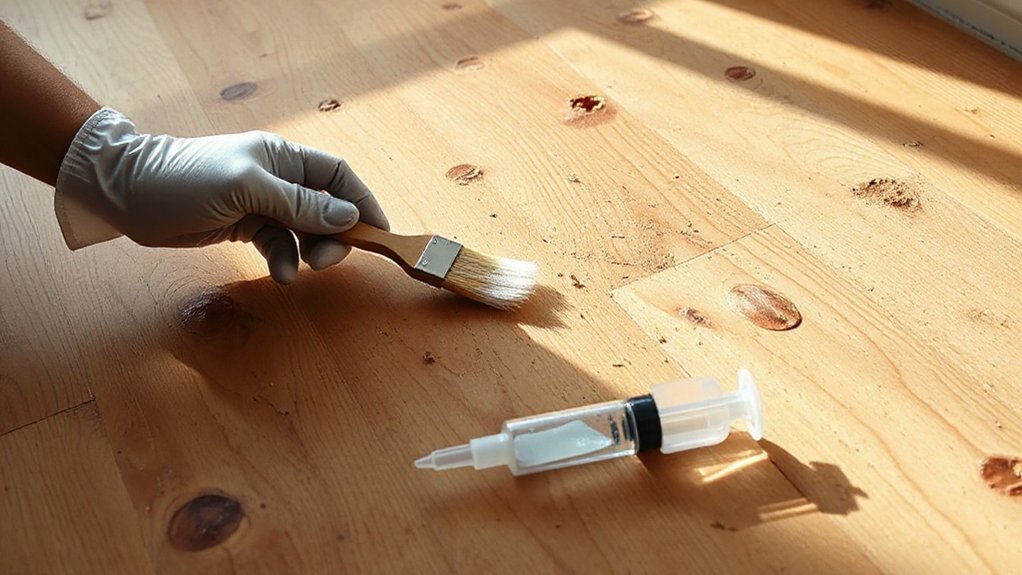
If you want a lower-odour alternative to solvent-based treatments, use a boron (borate) wood preservative to tackle woodworm in floorboards by letting the active salts soak into the timber and remain there. Choose a ready-to-use gel or mixable concentrate and target any bare wood and known flight holes. For best results, match the Woodworm lifecycle: treat when the boards are dry and heated so the preservative penetrates, and recheck after several weeks for fresh frass. Use Boron application techniques that drive uptake: brush on generous coats, flood drill holes with a syringe, and seal end-grain. Keep rooms ventilated, wear gloves, and don’t paint or varnish until fully dry.
Treat Woodworm in Joists and Subfloor
Because joists and the subfloor sit in the damper, less ventilated part of the house, you need to treat them differently from exposed floorboards. Lift a few boards for access, wear gloves and a respirator, and vacuum dust and frass so the treatment penetrates. Check moisture first; improve underfloor ventilation and fix leaks, or woodworm larvae will keep thriving. Brush or spray a boron-based woodworm fluid onto all faces you can reach, especially bearing ends, notches and drilled holes. For deeper protection, inject gel into exit holes and along cracks, then cap holes with filler. Don’t over-wet timbers. Finish with a compatible timber preservation product once dry, and recheck in 6–12 months.
When to Call a Woodworm Treatment Specialist
If you’re seeing fresh flight holes and fine frass across multiple floorboards and rooms, you should call a woodworm treatment specialist straight away. You can’t ignore signs of structural compromise like spongy boards, sagging, cracking, or weakened joists, because they often need professional assessment and remedial work. If activity keeps returning after treatment, don’t keep reapplying chemicals—get a specialist to identify the species, locate the source, and stop the infestation properly.
Widespread Active Infestation
Three clear warning signs usually mean you shouldn’t try to tackle woodworm in floorboards yourself: fresh, pale bore dust (frass) gathering near multiple exit holes, new holes appearing over weeks, and soft or crumbling timber spreading across more than one area of the floor.
If you’re seeing these across rooms or along several joist lines, book a woodworm treatment specialist promptly. You’ll need proper pest identification to confirm the beetle species and the right treatment plan, rather than guessing with off‑the‑shelf sprays. A specialist can trace the source, check adjacent timbers, and treat hidden voids safely, using professional-grade insecticides or targeted gel systems. They’ll also advise on moisture control and furniture preservation, so you don’t spread infestation via moved items or stored boards.
Structural Damage Indicators
Although woodworm often looks like a cosmetic nuisance at first, certain symptoms suggest it’s already weakening your floor structure and you should bring in a woodworm treatment specialist. If boards feel “spongy”, dip underfoot, or bounce, the larvae may have hollowed the timber. Check for cracking along the grain, crumbling edges around screw or nail heads, and joists that split when you probe gently with a bradawl. Doors sticking, skirting gaps, and sudden unevenness can indicate deflection from compromised supports. Don’t sand or start Furniture refinishing until a specialist confirms the timber’s load-bearing strength. You’ll also need advice on localised strengthening, moisture control, and Pest prevention measures to stop further structural deterioration.
Recurrent Woodworm Activity
When woodworm signs keep returning after you’ve cleaned up and treated the surface, you’re likely dealing with active infestation deeper in the floor structure. Fresh, pale frass, new exit holes, or renewed beetle sightings in spring and summer mean larvae are still feeding below the boards. Don’t keep reapplying DIY sprays; you’ll miss joists, bearer timbers, and sub-floor voids where the problem often persists.
Call a woodworm treatment specialist if activity continues after one treatment cycle, if multiple rooms are affected, or if you can’t access the underfloor safely. A surveyor can confirm the species, moisture source, and extent, then specify injection, paste, or controlled spraying. This supports Woodworm prevention and long term maintenance planning.
Stop Woodworm Returning to Floorboards
To stop woodworm returning to your floorboards, you must remove moisture sources by fixing leaks, improving ventilation, and keeping humidity down. Seal and protect the timber with an appropriate wood preservative and a durable finish so beetles can’t re-infest. Keep monitoring for fresh exit holes and fine dust, and re-treat promptly at the first sign of activity.
Eliminate Moisture Sources
Because woodworm larvae thrive in damp timber, you’ll only stop them returning to your floorboards by cutting off moisture at the source. Start with Moisture control: fix leaking pipes, dripping radiators, and faulty shower seals, then check for overflow from gutters or downpipes wetting external walls. Inspect the sub-floor for standing water and improve drainage around the property if needed.
Next, prioritise Ventilation improvement. Clear blocked air bricks, open up suspended-floor vents, and remove stored items that restrict airflow in the underfloor void. Use extractor fans in kitchens and bathrooms, and keep them running after bathing or cooking. Maintain steady heating to prevent condensation, and use a dehumidifier in persistently damp rooms. Finally, monitor humidity with a hygrometer and aim for consistently dry conditions year-round.
Seal And Protect Timber
Once you’ve tackled damp and improved airflow, seal and protect the timber so adult beetles can’t easily lay eggs in exposed grain and any remaining larvae have fewer routes back into your floorboards. Start with thorough preparation: vacuum dust, scrape off loose finishes, and wipe down so coatings bond properly. Fill flight holes and splits with a suitable wood filler, then sand smooth. Apply a boron-based wood preservative to bare boards, joists, and edges, following the manufacturer’s coverage rates and drying times. Once cured, carry out timber sealing with a hard-wearing varnish, floor paint, or penetrating oil; coat board ends and tongue-and-groove edges where possible. Maintain a continuous film, and don’t leave raw patches around pipes or thresholds either.
Monitor And Retreat Early
Even after you’ve treated and sealed the boards, you should monitor for fresh activity so you can retreat before an infestation re-establishes. Check the floorboards monthly for new exit holes, gritty frass, or blistered finish, especially around skirting boards and under radiators. Keep humidity down with ventilation and a dehumidifier, because damp timber invites larvae.
- Mark suspect areas with pencil and date them to track change.
- Vacuum frass, then recheck in 7–14 days to confirm activity.
- Plan treatment timing for spring/summer, when adults emerge and products penetrate best.
- Follow DIY safety: wear gloves, eye protection, and a respirator, and isolate the room.
If signs persist, retreat promptly or call a UK timber specialist.
Frequently Asked Questions
Can Woodworm Treatment Affect Underfloor Heating Systems or Pipes?
Yes, it can if you don’t choose the right wood treatment. You’ll protect pipes and underfloor heating by using low-odour, non-corrosive products, keeping moisture levels stable, and avoiding soaking boards or joints during application.
Is It Safe to Treat Floorboards if Pets and Children Live at Home?
Yes, it’s safe if you follow label directions. Prioritise Pet safety and Child protection: remove them during treatment, ventilate well, cover food bowls, and keep rooms closed until surfaces dry fully. Consider professional, low-odour products.
Will Woodworm Treatment Remove Staining or Repair Holes in Floorboards?
No, it won’t erase Woodworm stains or sort floorboard repairs; it simply sees off the little lodgers. You’ll need sanding, bleaching or stain-block, then fill holes, splice boards, or replace sections.
How Long Should Rooms Be Ventilated After Applying Woodworm Insecticide?
Ventilate rooms for 2–4 hours, or until the smell’s gone and surfaces are dry. You’ll guarantee proper ventilation duration and insecticide safety by opening windows, using extractor fans, and keeping children, pets out.
Do I Need to Inform My Home Insurer or Mortgage Lender About Woodworm?
Around 1 in 5 UK home insurance claims get queried for nondisclosure, so yes—you should tell them. For Insurance disclosure, report active infestation or treatment. Consider Mortgage implications: inform your lender if structural timbers are affected.
Conclusion
Woodworm in floorboards isn’t just cosmetic; it’s a slow drill through your home’s backbone. If you’ve confirmed fresh dust, new holes, or weakened boards, don’t dither—check joists and subfloor, then treat fast. Use boron where you can reach bare timber, and improve ventilation to cut damp. If spread is wide, access is poor, or strength is doubtful, bring in a specialist. Keep monitoring, or it’ll creep back in.