
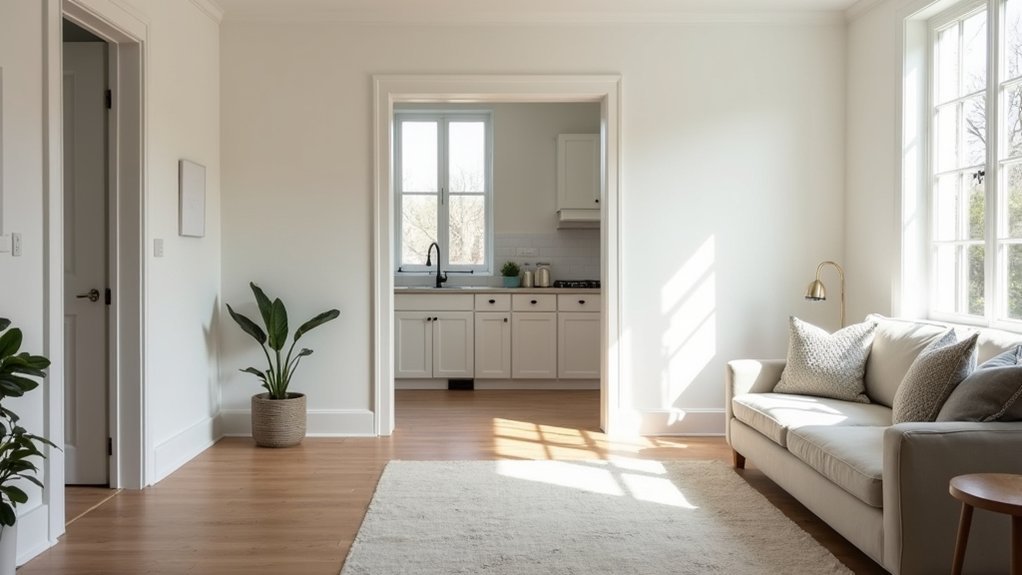
You’re going to see 2025 interiors move toward warmth, texture, and shapes that feel calmer to live with. You’ll trade stark whites for layered earth tones, add matte woods and natural stone, and choose curves over hard lines. You’ll also hide more tech and buy fewer, better pieces that last. But the real shift isn’t just what you pick—it’s how you combine it all without your space feeling staged…
Top 2025 Interior Trends (Quick List + Why)
If you’re refreshing a room in 2025, you’ll see the biggest interior trends push your space toward warmer minimalism, smarter functionality, and more character. You’ll choose fewer, better pieces, and you’ll let craftsmanship show through texture, grain, and joinery. You’ll also favor layouts that support real life: flexible seating, hidden storage, and lighting layered for work and rest.
Quick list + why: Curved silhouettes (they soften edges and feel inviting). Mixed materials (they add depth without clutter). Vintage and artisan accents (they bring soul and uniqueness). Biophilic details like plants, natural light, and organic forms (they boost comfort). Quiet luxury with durable finishes (it looks elevated and lasts). Tech-integrated convenience (it reduces friction without stealing attention).
Color Trends 2025: Warm Neutrals and Earth Tones
As cooler grays fade out, 2025 color trends lean into warm neutrals and earth tones that make rooms feel grounded, calm, and lived-in. You’ll see creamy off-whites, sandy beige, camel, and soft taupe replacing stark whites and icy charcoal.
To add depth, you can layer muted clay, terracotta, cinnamon, olive, and smoky ochre on walls, cabinetry, or textiles. These shades flatter natural light, soften sharp lines, and help open-plan spaces feel cohesive without looking flat.
If you like contrast, pair warm neutrals with inky brown, deep forest green, or a dusty navy accent—just keep undertones consistent so the room doesn’t fight itself. Finish with matte or eggshell paint to keep everything relaxed and modern, not glossy.
2025 Material Trends: Wood, Stone, and Tactile Finishes
Rather than relying on paint alone, 2025 interiors build their personality through materials you can see and feel. You’ll notice warmer woods leading the way: white oak, walnut, and ash with matte sealers that show grain, not gloss. You can mix wide-plank floors with slatted cabinetry or ribbed wall panels for subtle depth.
Stone goes bolder and more natural. You can choose veined marbles, travertine, and soapstone, then use them on counters, fireplace surrounds, and even backsplash ledges. Look for honed, brushed, or leathered finishes that hide smudges and add softness.
Tactile surfaces finish the story. You can add limewash, clay plaster, microcement, or textured tile to bring shadow, durability, and a lived-in calm.
Curves, Arches, and Softer Silhouettes (2025 Look)
Because hard edges can feel visually noisy, 2025 interiors lean into curves, arches, and softer silhouettes to calm a room and make it feel more welcoming. You can echo this shift with rounded sofas, barrel chairs, and pebble-shaped coffee tables that keep traffic flowing and sightlines gentle. Swap square mirrors for arched frames, or add a curved headboard to soften a bedroom instantly.
Look for radius corners on kitchen islands, scalloped cabinet details, and fluted fronts that read smooth even from across the room. You’ll also see cased openings and arched doorways replacing sharp transitions between spaces. Balance the look by pairing one bold curve with simpler pieces so the room feels intentional, not theme-driven. Add curve-led lighting to finish.
Sustainable Interiors 2025: Low-Waste, Long-Life Choices
If you want a 2025-ready home that still feels timeless, sustainability has shifted from a “nice-to-have” to a design baseline. You’ll get the biggest impact by choosing fewer, better pieces that last: solid wood, repairable hardware, and high-quality textiles with tight weaves.
Prioritize low-VOC paints, formaldehyde-free panels, and natural finishes that age gracefully instead of peeling.
Design for disassembly: pick modular sofas, click-lock shelving, and fasteners you can remove, so parts can be repaired or swapped.
Specify recycled-content glass, responsibly sourced stone, and certified wood, and ask brands for product declarations.
Reduce waste with made-to-measure window treatments and accurate ordering.
Finally, layer efficiency into style—LED lighting, smart controls, and well-placed insulation—so your rooms look good and run lean.
Vintage + Secondhand: How to Do It Well in 2025
Sustainability gets even easier when you shop what already exists, and in 2025 vintage and secondhand feel less like a compromise and more like a smart style move.
Start with one “anchor” piece—a sculptural chair, a patinated credenza, or a bold rug—then build around it with quieter, modern basics. Check proportions, joinery, and materials, and don’t apologize for wear; small nicks read as character when you repeat the piece’s tones elsewhere.
Mix eras by matching silhouettes or finishes, not dates. Use online resale filters to hunt by measurements, wood species, and color, then set alerts.
Refresh finds with new hardware, upholstery, or a careful refinish, and always inspect for odors, pests, and wobbles.
2025 Layout Trends: Zones, Storage, Flexibility
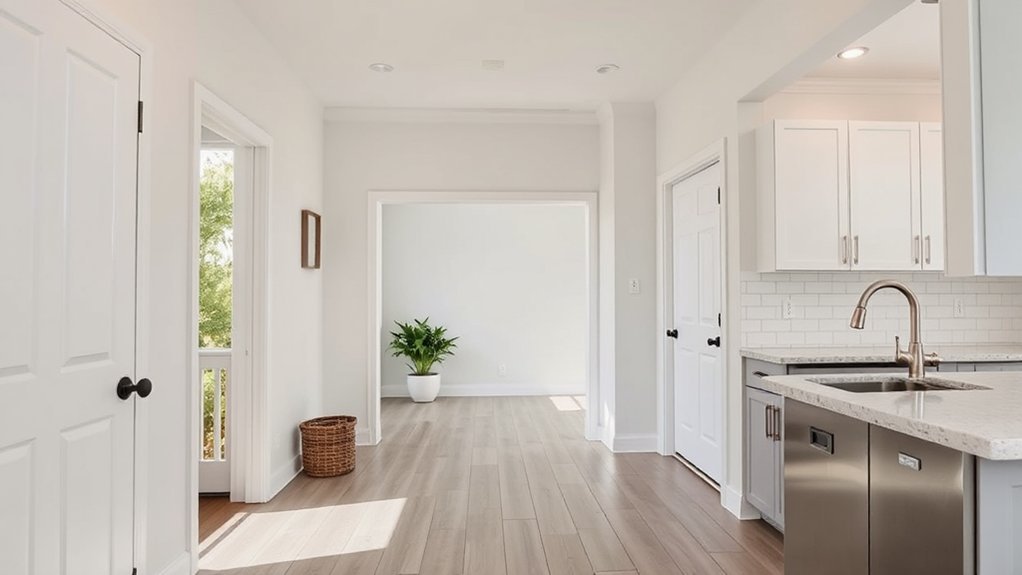
As homes keep pulling double (or triple) duty in 2025, smart layouts matter as much as the furniture you buy. Start by carving clear zones: a reading nook, a work perch, a dining corner, even within one room. Use rugs, lighting, and open shelving to signal boundaries without building walls.
Next, prioritize storage that disappears into the plan. Choose benches with lift-up seats, wall-to-wall cabinetry, and toe-kick drawers so clutter doesn’t migrate across your surfaces. Go vertical with tall cupboards and slim ledges.
Finally, design for flexibility. Pick nesting tables, stackable chairs, and a sofa that floats so you can reset the room fast. Leave circulation paths open, and you’ll make small spaces feel bigger and calmer, every day.
Hidden Smart-Home Tech for Calmer Interiors (2025)
While smart homes keep getting smarter, the calmest interiors in 2025 come from tech you barely notice. You’ll hide speakers behind plaster or slatted wood, swap blinking hubs for app-only control, and recess charging pads into nightstands and entry consoles. You’ll also tuck routers into ventilated cabinetry so visual noise doesn’t compete with art and texture.
You can automate light and air without gadget clutter: micro sensors disappear in trim, vents, and ceiling plates, then adjust circadian lighting, humidity, and filtration quietly in the background. Motorized shades vanish into pockets, and smart glass shifts tint without cords.
Even security goes subtle with flush doorbells, concealed cameras, and biometric locks that read like hardware, not equipment. Your space stays serene, and your routines run smoothly.
How to Try 2025 Trends Without Regret (Filters + Rules)
Quiet tech clears the visual clutter, but the bigger win comes from choosing trends that won’t feel dated next year. Start with three filters: function, longevity, and reversibility. If it solves a daily pain point, uses durable materials, and you can undo it in a weekend, it’s safe to test.
Next, set rules: keep your “forever” pieces neutral (sofa, flooring, big casegoods), and push trends into swappable layers like paint, hardware, lighting shades, pillows, art, and rugs. Limit yourself to one bold trend per room, then repeat it twice in small doses for cohesion.
Before you buy, mock it up: tape paint samples, print fabric, and live with them for 48 hours. If you’re still excited, commit.
Conclusion
You’ll see 2025 interior trends leaning into warmth, texture, and ease. Choose creamy neutrals and earthy layers, then add matte wood, natural stone, and touchable finishes for depth. Bring in curves, arches, and rounded pieces to soften the room’s flow. Shop vintage or secondhand, and prioritize durable, repairable items to cut waste. Create flexible zones with smart storage, and hide tech where you can. Try trends selectively, and you won’t regret them.