
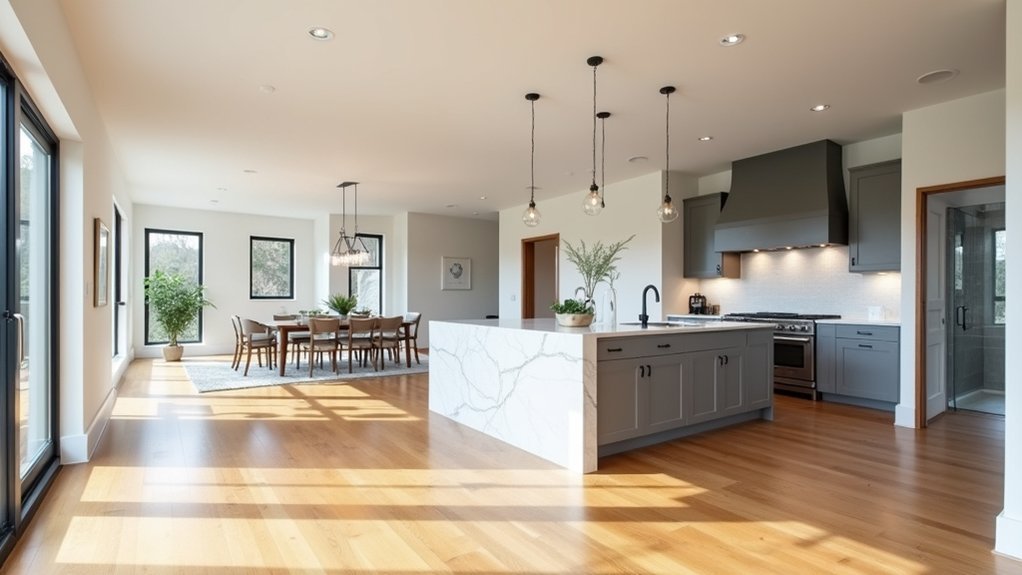
You probably don’t know that buyers often assign more value to consistent finishes and “move-in-ready” cohesion than to the most expensive single upgrade. If you update with ROI in mind, you’ll focus on high-visibility zones like kitchens, baths, flooring, and lighting, then tie them together with modern paint tones and streamlined hardware. The trick is choosing changes that look premium but price out like midrange—starting with the few that move comps fast.
Key Takeaways
- Refresh kitchens with cabinet refacing, modern pulls, quartz-look counters, and efficient appliances to deliver strong ROI and buyer appeal.
- Upgrade bathrooms with new vanities, frameless glass, modern mirrors, and layered LED lighting to signal move-in readiness.
- Replace or refinish flooring using wide-plank LVP or matte/satin hardwood in warm neutrals for a cohesive, updated look.
- Repaint in warm whites or greiges, patch and caulk, and repaint trim in semi-gloss to create a clean, polished presentation.
- Modernize lighting and hardware with coordinated finishes and 2700K–3000K LEDs; add smart storage like closet systems and pantry organizers.
Highest-ROI Interior Updates (Cost vs Payoff)
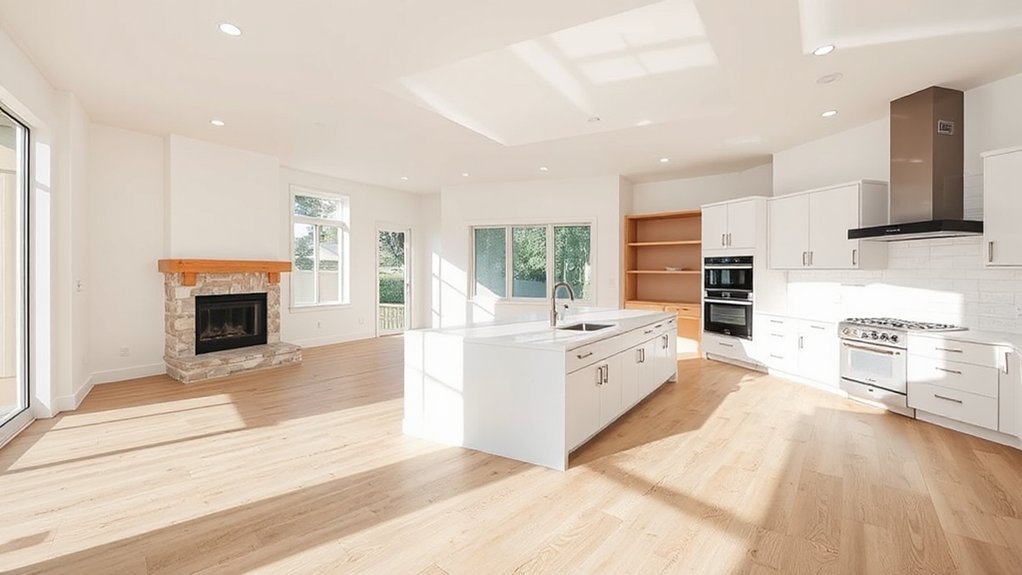
While not every renovation pays you back at closing, a few interior updates consistently deliver the best ROI because buyers notice them immediately and lenders/agents can justify the value bump.
Prioritize kitchens: refacing cabinets, upgrading pulls, adding quartz-look counters, and installing efficient appliances typically costs less than a full remodel yet supports stronger comps.
In baths, swap dated vanities, improve lighting, and add frameless glass; you’ll reduce buyer objections and shorten days on market.
Replace worn flooring with wide-plank LVP or refinished hardwood for a clean, current baseline.
Add Smart storage—closet systems, pantry organizers, and built-ins—so rooms photograph larger and appraise as more functional.
Finally, align sightlines to outdoor aesthetics with larger sliders or consistent interior-exterior finishes, boosting perceived livable square footage.
Budget-Friendly Interior Updates Before You List
Before you list, you can boost buyer appeal fast with low-cost updates that read “move-in ready” in photos and showings. Repaint high-traffic spaces in clean neutral tones to brighten rooms and match today’s streamlined, modern buyer preferences.
Then swap dated light fixtures and refresh cabinet pulls, faucets, and door hardware so the finish package looks coordinated and current.
Fresh Paint, Neutral Tones
Because buyers form opinions in seconds, a fresh coat of paint in modern neutral tones ranks among the highest-ROI updates you can make before listing. Choose warm whites, greiges, and soft taupes that read clean in daylight and photos, and you’ll widen buyer appeal across styles.
Use Color psychology to your advantage: calm neutrals signal move-in readiness, make rooms feel larger, and let buyers project their own furnishings.
Prep like a pro—patch nail holes, sand glossy trim, caulk gaps, and spot-prime stains—so your finish looks crisp, not “quick.”
For paint durability, pick a washable eggshell for walls and a scuff-resistant semi-gloss for trim, so high-traffic areas stay showroom-sharp through showings and inspections.
Lighting And Hardware Refresh
Even if you don’t renovate, swapping dated light fixtures and tired hardware can instantly modernize your home’s “first impression” for a fraction of the cost. Prioritize high-visibility spots: entry, kitchen, primary bath, and main hallway.
Choose warm-white LEDs (2700–3000K) and add dimmers to create ambient lighting buyers expect in staged listings. Replace mismatched bulbs and yellowed covers so photos read bright, clean, and consistent.
Update cabinet pulls, knobs, and faucets in cohesive finishes—matte black, brushed nickel, or champagne bronze sell well right now.
Keep hardware styles consistent: simple bar pulls for contemporary homes, classic knobs for traditional layouts.
Measure existing hole spacing to avoid patching, and upgrade door levers for a premium feel.
Kitchen Interior Updates Buyers Notice First
While curb appeal gets them in the door, your kitchen often seals the deal, so the updates you choose should signal quality and modern function at a glance.
Start with cabinet-facing improvements: paint or refinish in warm whites, greiges, or muted oak tones, then add soft-close hinges and full-extension slides.
Swap dated laminate for durable quartz or sintered stone, and choose an undermount sink with a pull-down faucet that feels premium.
Buyers also clock layout clarity, so keep counters staged and consider open shelving in one zone to lighten the room without sacrificing storage.
Finally, invest in standout backsplash designs—large-format tile, stacked subway, or slab-like panels—paired with clean grout lines.
Keep finishes consistent in brushed nickel or matte black for a cohesive, current look.
Bathroom Interior Updates With the Best ROI
After buyers clock the kitchen, they judge your bathroom on cleanliness, comfort, and “newness” in seconds—so the best-ROI updates focus on high-visibility surfaces and everyday function.
For Bathroom remodeling that pays back, start with a bright, moisture-resistant paint and a crisp, updated vanity top; these read “maintained” instantly. Swap dated mirrors for simple framed glass, and add layered lighting (vanity plus overhead) in warm-white LEDs to flatter skin tones.
Prioritize fixture upgrades: a modern faucet, efficient toilet, and a pressure-balanced shower valve signal quality and reduce inspection concerns. Re-grout and recaulk tile lines, replace worn seals, and install a quiet exhaust fan to kill odors and humidity.
Keep finishes cohesive: brushed nickel or matte black, not mixed.
Flooring Updates That Raise Perceived Home Value
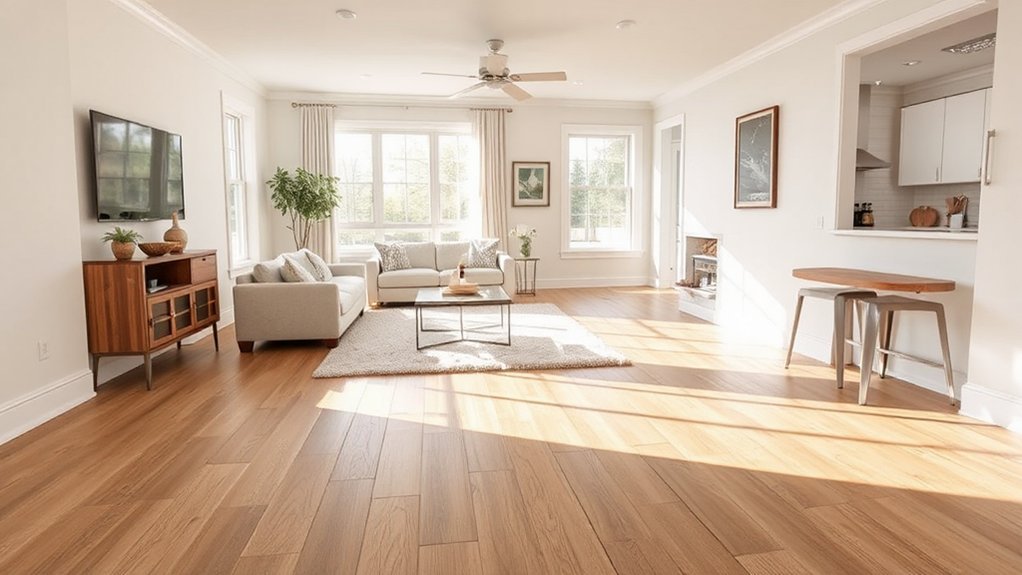
When you update flooring, you’re signaling condition, cleanliness, and style—three cues buyers price in fast.
You can refinish existing hardwood to restore a premium look, install luxury vinyl plank for a durable, on-trend finish, or upgrade to tile floors to sharpen kitchens, baths, and high-traffic zones.
Choose the option that best fits your comps and price point so the upgrade reads intentional and value-adding, not mismatched.
Refinish Existing Hardwood
How much value can you release without replacing a single plank? By refinishing existing hardwood, you boost buyer confidence fast: floors read as “well cared for,” photos look cleaner, and showings feel brighter.
Start with a pro assessment of wear depth, pet stains, and board movement so you don’t over-sand. Choose a finish that matches today’s demand—matte or satin over high-gloss—and keep stain tones consistent with your home’s light: warm neutrals, soft walnut, or clear coats that celebrate grain.
Seal edges and high-traffic paths for durability. Then stage to amplify the upgrade: Vintage furnishings pop against refreshed boards, and Artistic accents feel intentional, not distracting, when the floor looks crisp and even.
Install Luxury Vinyl Plank
Luxury vinyl plank (LVP) gives you the “new floor” impact buyers want without the cost and upkeep of site-finished hardwood. Choose a modern, wide-plank look in a neutral oak or warm greige to match current listings and photography trends.
Prioritize rigid-core Luxury vinyl with a 20-mil wear layer and attached pad for a quieter, premium feel underfoot.
For ROI, run LVP through main living areas for a seamless, expansive sightline, and use consistent connections at doorways.
Follow smart installation tips: acclimate planks, flatten subfloors, stagger end joints, and leave proper expansion gaps along walls.
Finish with updated baseboards or shoe molding so the job reads “new-build clean,” not “quick flip.” Buyers notice the details and bid accordingly.
Upgrade To Tile Floors
Why do tile floors keep showing up in top-performing listings? Because buyers read them as durable, clean, and design-forward, especially in kitchens, baths, and mudrooms.
You’ll boost perceived value when you swap worn surfaces for large-format porcelain or stone-look tile that photographs crisp and modern.
Choose Tile patterns that match your price point: stacked, herringbone, or checkerboard can signal custom work without a full remodel.
Don’t ignore grout colors—warm gray hides wear, bright white feels luxury, and tone-on-tone grout makes rooms look larger.
Prioritize slip resistance and rectified edges for tighter lines. Keep connections flush to adjacent floors, and extend tile into showers for a cohesive, upgraded feel that helps offers compete fast.
Paint, Trim, and Lighting Updates That Feel Modern
Even if you don’t renovate a single room, updating paint, trim, and lighting can make your entire home read newer—and buyers notice that immediately.
Choose current color schemes: warm whites, soft greiges, and muted greens that photograph cleanly and feel cohesive. Use accent walls sparingly in dining rooms or offices to add depth without polarizing; keep finishes in matte or eggshell for a high-end look.
Replace dated baseboards and door casings with simple, thicker profiles, then paint trim in crisp semi-gloss for contrast and easier maintenance.
Swap yellow bulbs for consistent 2700K–3000K LEDs, add dimmers, and upgrade builder-grade fixtures to slim flush mounts or modern pendants.
You’ll signal move-in readiness and reduce buyer objections fast.
Frequently Asked Questions
Do Interior Updates Affect Appraisal Value Differently Than Buyer Perception?
Yes—you’ll see different impacts: appraisers credit Interior lighting and flooring upgrades through comps, condition, and functional utility, while buyers react emotionally to trend-fit and freshness. You can over-impress buyers without boosting appraisal much.
Should I Disclose DIY Renovations When Selling My Home?
Yes, you should disclose DIY renovations to avoid surprises during inspections and negotiations. You’ll protect your price by documenting permits, materials, and renovation costs, while flagging DIY pitfalls and offering receipts, photos, and warranties.
Which Renovations Require Permits and Impact Resale Value?
You’ll need renovation permits for electrical, plumbing, HVAC, structural changes, additions, roofs, and major kitchen/bath work under building codes. Picture clean inspection stickers—buyers trust them, boosting resale. Skip permits, and appraisers flag risk.
How Do Current Design Trends Influence Buyer Offers in My Market?
Current design trends raise buyer offers when you match local tastes: on-trend color schemes signal move-in readiness, and updated furniture styles help buyers visualize scale. You’ll see stronger bids when finishes feel current, not polarizing.
Should I Stage the Home After Renovations to Maximize Return?
Yes—you should stage; NAR reports 20% of agents cite home staging boosts offers 1–5%. Align renovation timing so staging photos hit peak demand, spotlight trend finishes, sharpen room function, and justify stronger pricing.
Conclusion
You don’t need a full gut-renovation to lift your sale price—you need the right signals. When you refresh the kitchen, brighten bathrooms, swap tired floors, and tighten up paint, trim, and lighting, you’re turning your home into a polished storefront. Think of each update like tuning an instrument: small adjustments, louder impact. Keep finishes cohesive, lean into warm neutrals and modern lines, and you’ll make buyers feel “move-in ready” before they step inside.