
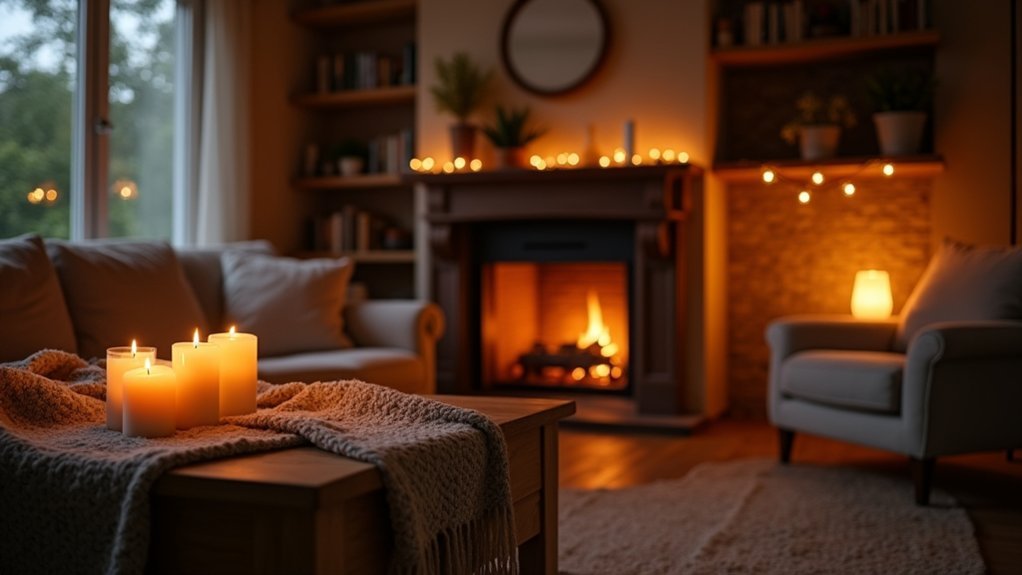
You can switch on cosy mode fast by fitting warm bulbs (2200K–2700K) with high CRI and keeping colour temperature consistent. Layer lighting with soft ambient glow, focused task beams, and gentle accents for texture and artwork. Place lamps low and brighten corners to bounce light off walls and cut harsh shadows. Add LED‑compatible dimmers to tune brightness through the evening. Finish with warm fairy lights or candles, used safely, and there’s more to try next.
Key Takeaways
- Choose warm bulbs (2200K–2700K) with high CRI to create a soft, candlelit glow and natural-looking colours.
- Layer ambient, task, and accent lighting to balance comfort and function without harsh overhead brightness.
- Place lamps low and light up corners to reduce strong shadows and make the room feel warmer and more spacious.
- Add LED-compatible dimmers to fine-tune brightness for evenings, film nights, and winding down without switching lights off.
- Use candles or warm fairy lights safely to add gentle sparkle and atmosphere, ideally with heatproof trays or timers.
Choose Warm Cosy Bulbs (2200K–2700K)
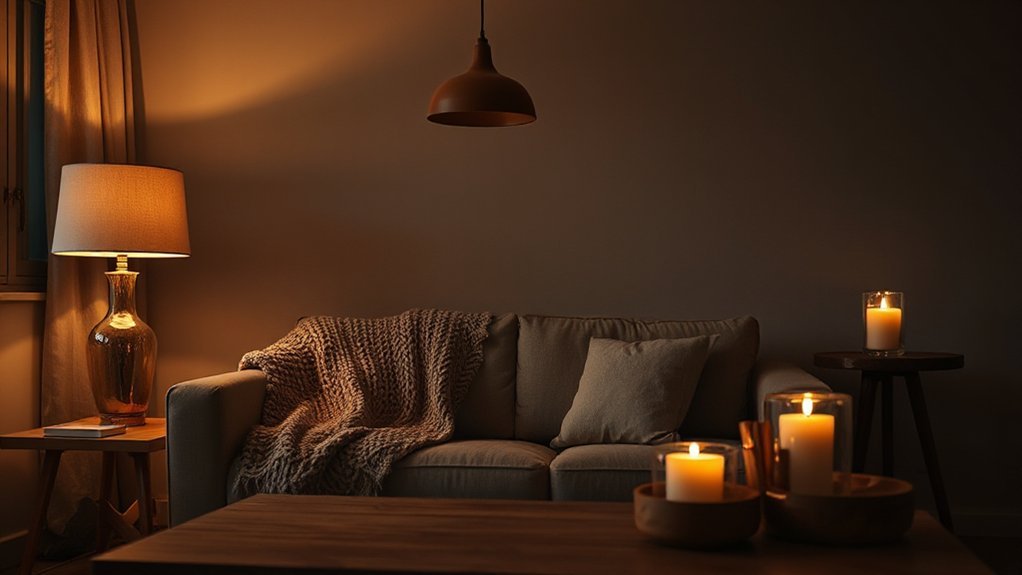
If you want a room to feel instantly cosier, start with the colour temperature of your bulbs. Aim for 2200K–2700K, which gives a warm, candlelit glow instead of a stark, bluish cast. Check the box for Kelvin ratings and avoid “cool white” or “daylight” options in living rooms and bedrooms. Your bulb selection matters as much as the fitting: choose warm LED lamps with a high CRI (90+ if possible) so fabrics, timber, and skin tones look natural. If you dim lights, buy dimmable bulbs and match them to your dimmer to prevent flicker. Keep colour temperature consistent across the room to avoid patchy, uncomfortable colour shifts.
Layer Cosy Lighting: Ambient, Task, Accent
Once you’ve nailed warm bulbs, you’ll get the real cosy effect by layering light rather than relying on a single ceiling fitting. Start with ambient light to set an even base level, then add task light where you read, cook, or work, and finish with accent light to give depth and highlight textures. Keep Lighting color consistent across all layers so the room feels calm, not patchy.
- Ambient: use dimmable fittings or a shaded pendant to soften overall brightness.
- Task: choose focused beams for desks, counters, and reading chairs without glare.
- Accent: wash a wall, pick out artwork, or lift shelving detail for visual warmth.
Match fixture styles to your décor—brass, matt black, or ceramic—and you’ll make the scheme feel intentional.
Place Lamps Low and Light Up Corners
When you drop light sources below eye level, the room instantly feels calmer and more inviting. Choose table lamps on sideboards, low shelves, or even the floor beside a sofa, so the light washes across surfaces rather than glaring straight at you. This lamp placement softens shadows and makes seating areas feel anchored.
Next, tackle dark edges. Aim for deliberate corner illumination with a slim floor lamp, an uplighter, or a small lamp on a plant stand to bounce light off nearby walls. You’ll visually expand the room, reduce harsh contrast, and create cosy pockets for reading or chatting. Keep shades opaque or lined to control glare, and position leads safely along skirting boards so the look stays tidy and practical.
Add Dimmers to Fine-Tune Cosy Brightness
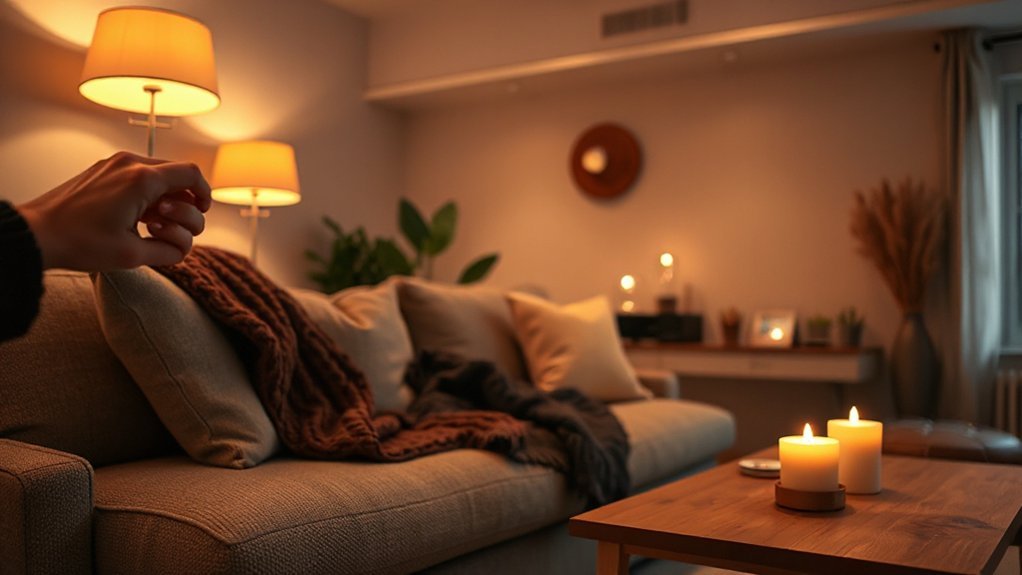
Although your lamps already do a lot of the heavy lifting, dimmers give you the quickest way to dial the room into cosy mode. Fit dimmer switches so you can soften harsh overheads, match light to the time of day, and keep the space flattering without changing fittings. Good brightness control stops glare on screens, calms busy corners, and makes textures feel warmer.
- Drop levels for film nights without plunging the room into darkness
- Nudge light up for reading, then ease it down for winding down
- Balance multiple lamps so no single source feels stark
Choose LED-compatible dimmers and dimmable bulbs, or you’ll get flicker and buzzing. If you’re unsure about wiring, book a qualified electrician.
Use Candles or Fairy Lights (Safely) for Glow
If you want instant cosy glow without touching the main lights, place a few candles or a short run of fairy lights at low level to soften edges and warm up the room. Choose Scented candles with a steady, low flame and keep them on a heatproof tray, well away from curtains, books and pets. Never leave them unattended, and snuff rather than blow to avoid hot wax splatter. For a no-flame option, use LED string lights: they stay cool, sip power, and you can drape them along a bookcase, around a mirror, or inside a glass jar for a lantern effect. Pick warm white, not blue-white, and use a timer plug so they switch off automatically at bedtime.
Frequently Asked Questions
How Does Lighting Affect Sleep Quality and Melatonin Production?
Lighting affects sleep by shifting melatonin: bright, cool light temperature suppresses it and delays drowsiness, while warm, dim room brightness supports release. You’ll sleep better if you reduce screens and use lamps before bed.
Are Smart Bulbs Worth It for Creating a Cosy Atmosphere?
Yes, smart bulbs are worth it if you want reliable ambience customization. You’ll get smart bulb benefits like warm dimming, scenes, and schedules, so you can set cosy light instantly, save energy, and avoid harsh glare.
What Lighting Choices Help Reduce Eye Strain During Evening Reading?
Choose warm bulb colour (2700–3000K) and avoid harsh overhead glare. Use a shaded table lamp and adjust lamp placement so light falls over your shoulder onto the page. Keep brightness moderate.
How Can I Make Small Rooms Feel Cosy Without Looking Cluttered?
Like Mary Poppins’ bag, you’ll make it cosy by editing hard: prioritise smart decor placement, hide overflow in built-ins, and keep surfaces clear. Use tight colour schemes—warm neutrals, one accent—and scale furniture to fit.
Which Energy-Efficient Lighting Options Still Feel Warm and Inviting?
Choose LED bulbs with Warm color temperatures (around 2700K), and dimmable fittings. Pair them with Vintage fixtures for character. Use LED filament lamps, smart bulbs, and PIR sensors in halls—you’ll cut bills without losing warmth.
Conclusion
Switch to warm 2200–2700K bulbs and you’ll stop living in what looks like an NHS waiting room at 2am. Layer ambient, task and accent light, then drop lamps low so corners don’t sulk in shadow. Add dimmers so you’re not stuck with “interrogation” or “blackout” as your only settings. Finish with candles or fairy lights—safely—because nothing says cosy like atmosphere, not a fire brigade cameo.