
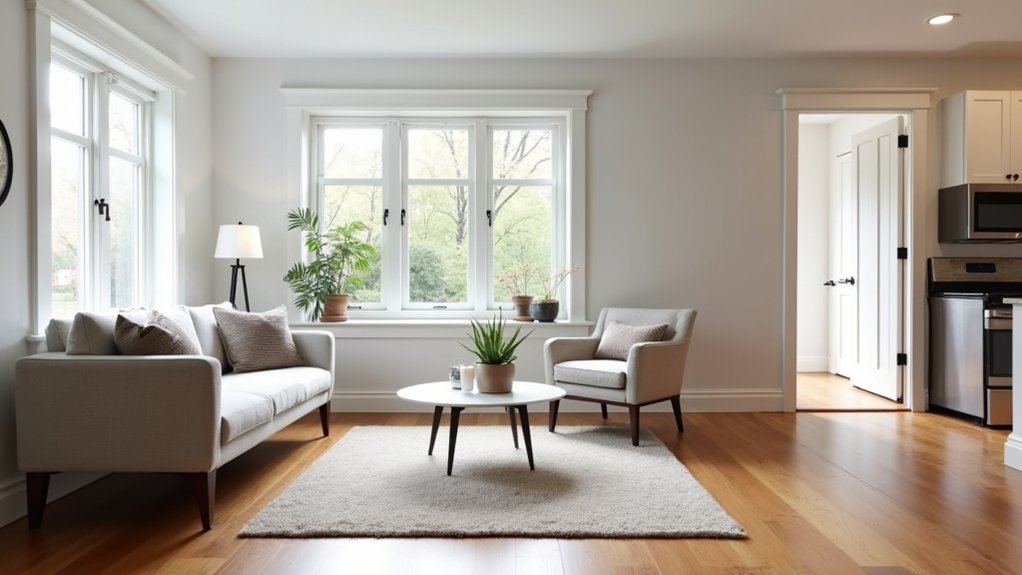
Before you let a tenant move in, you need to treat your home like a regulated product, not a personal space. Start with a rental-readiness walkthrough and flag safety and compliance risks first—electrics, gas appliances, smoke and CO alarms, locks, and escape routes. Then test plumbing, heating, and ventilation, and fix the small faults tenants report fastest. Once it’s clean, odour-free, and presentable, you’ll see where upgrades actually pay off…
Key Takeaways
- Do a room-by-room rental-readiness walkthrough, noting defects, testing appliances, recording meter readings, and photographing everything for baseline documentation.
- Fix all safety and compliance issues first: EICR, smoke and carbon monoxide alarms, safe escape routes, and secure, code-compliant stairs and glazing.
- Test and service major systems—heating, plumbing, electrics, and ventilation—to prevent breakdowns and emergency call-outs during the tenancy.
- Complete essential repairs and deep cleaning: reseal bathrooms, fix leaks and doors, clear drains, remove odours, and tackle mould sources.
- Improve kerb appeal and durability: tidy exterior, upgrade lighting and hardware, and replace worn high-traffic flooring with hard-wearing, easy-clean materials.
Do a Rental-Readiness Walkthrough Checklist
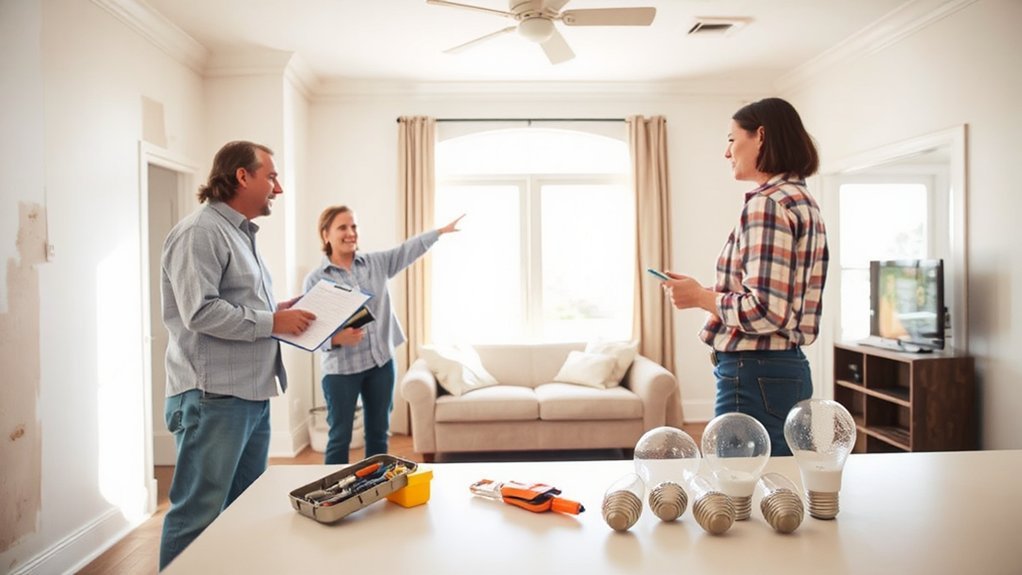
Before you advertise the property, walk it room by room with a rental-readiness checklist so you catch issues that will delay viewings, fail safety standards, or trigger tenant complaints.
Start at the entrance: check locks, keys, door closers, and the condition of communal areas if it’s a flat.
In each room, note scuffs, damaged flooring, loose handles, missing blinds, and tired sealant.
Test taps, flushes, extractor fans, heating controls, and appliance programmes, and record meter reads.
Photograph every defect and log make, model, and serial numbers for later maintenance.
Use your findings to set realistic rental pricing and decide what to refresh versus replace.
A documented baseline also supports Tenant screening by giving you clear standards to reference at viewing and inventory agreement.
Fix Safety and Code Issues Before Renting
Although cosmetic upgrades help viewings, you should tackle safety and legal compliance first because a single breach can stop you letting the property and expose you to fines or claims.
Start with Electrical safety: arrange an EICR through a qualified electrician and remedy any C1/C2 items before advertising.
Confirm your smoke alarms are fitted on every storey and testable, and install a carbon monoxide alarm in any room with a fixed combustion appliance.
Check escape routes: locks must open from inside without a key, and windows used for escape should open freely.
Tighten code compliance by reviewing glazing in critical locations, stair handrails, balustrade gaps, and trip hazards on thresholds.
Keep certificates, photos, and invoices ready for inspections or tenant queries.
Test Major Systems (HVAC, Plumbing, Electrical)
Once you’ve covered the safety and legal basics, pressure-test the home’s major systems so you don’t inherit emergency call-outs in the first month of a tenancy. Run them hard, log results, and book qualified trades where needed; UK landlords are expected to act promptly and keep services reliable.
- Heating/HVAC: schedule HVAC maintenance; fire the boiler, bleed radiators, and confirm thermostats and TRVs respond room by room.
- Plumbing: complete Plumbing inspections; check stopcock operation, static pressure, hot-water recovery, and every trap for slow weeps.
- Electrical: trip-test RCDs, verify sockets, and note any heat-discoloured accessories or buzzing.
- Ventilation: run extractor fans, check humid rooms clear quickly, and confirm external vents aren’t blocked.
Fix the Repairs Tenants Call About Most
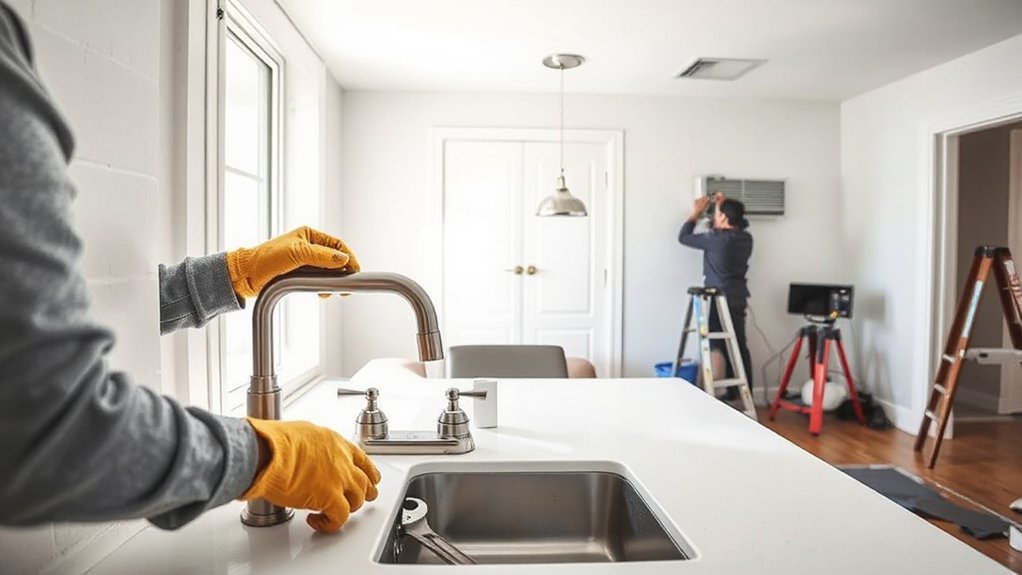
Your system checks will catch big-ticket failures, but day-to-day tenant calls usually come from smaller faults you can sort quickly if you tackle them now. Replace dripping taps and worn washers, reseal baths and showers, and clear slow wastes; these are common UK call-outs.
Tighten loose door handles, plane sticking internal doors, and fit new latches where privacy matters. Check window locks, adjust uPVC hinges, and replace snapped restrictors. Service extractor fans, replace failed light fittings, and label the consumer unit so you can isolate circuits fast.
Patch hairline cracks, re-fix skirting, and touch up high-wear paintwork near switches. Document what you’ve fixed and note responsibilities in lease agreements.
Pair robust Tenant screening with fewer niggles, and you’ll cut maintenance noise and protect yield.
Deep Clean and Remove Odors for a Rental-Ready Home
Once you’ve sorted the obvious repairs, you’ve got to deep clean the entire property to a professional standard, including skirting boards, grout, appliances, and carpets.
You’ll also need to tackle odour sources head-on—bins, drains, soft furnishings, damp patches, and pet residue—rather than masking smells with air fresheners.
When the home looks and smells genuinely clean, you’ll attract better tenants and reduce early complaints.
Whole-Home Deep Cleaning
A proper whole-home deep clean does two things fast: it lifts the visible grime that puts renters off, and it strips out the hidden odours that make a property feel “tired”. Treat it like a checklist job, room by room, before photos and viewings. Choose Eco friendly cleaning products where you can; they’re kinder on finishes and reduce lingering chemical smells.
For Natural odor control, focus on removing residues rather than masking them.
- Degrease kitchen fronts, extractor hood, tiles, and inside cupboards; clean the fridge seal.
- Descale bathroom taps, shower screen, grout lines, and toilet base; polish mirrors.
- Vacuum edges, skirting boards, radiators, and upholstery; shampoo carpets if needed.
- Wash internal windows, wipe light switches, handles, and doors; dust blinds thoroughly.
Odor Sources And Solutions
Where do stubborn rental smells really come from? You’ll usually find them trapped in soft furnishings, underlay, drains, bins, and damp-prone corners.
Start by shampooing carpets, steam-cleaning upholstery, and washing curtains on the correct cycle.
De-grease the kitchen: extractor filters, splashback grout, and inside cupboards.
In bathrooms, kill mould at the source, re-seal failing silicone, and clear plugholes with enzyme drain cleaner.
Don’t mask odours; remove them. Use odor absorption techniques such as bicarbonate of soda on carpets, activated charcoal in cupboards, and moisture traps in wardrobes.
Once neutral, choose air freshener options that suit UK lettings: subtle reed diffusers, low-allergen sprays, or timed plug-ins—never overpowering.
Ventilate daily, and fix leaks fast.
Patch, Caulk, and Paint for Fast Turnover
Patch wall dings straight away with filler, sand flush, and spot-prime so repairs don’t telegraph through the finish. Run a neat bead of paintable caulk along gaps at skirting boards, architraves, and around windows to stop draughts and make rooms look sharply finished.
Then refresh tired paint with a hard-wearing, neutral emulsion, cutting in clean lines so you’re ready for a fast, professional turnover.
Patch Wall Dings Fast
Even if the rest of the room looks spotless, small wall dings and hairline cracks can make a rental feel tired and poorly maintained, so it’s worth fixing them before viewings. For fast wall repair, keep your approach simple and repeatable, so you can turn a room around in an afternoon without redoing whole surfaces. Focus on blemishes at eye level, around door handles, and behind furniture where tenants often scuff plasterboard.
- Scrape loose material with a filling knife, then dust off thoroughly.
- Fill shallow dents with ready-mix filler; press firmly and feather the edges.
- For deeper holes, build in thin layers, letting each set fully.
- Sand flush with 120–180 grit and wipe clean, ready for the next step.
These quick fixes reduce complaints and protect deposits.
Caulk Gaps, Refresh Paint
Once you’ve filled and sanded the dings, seal the tell-tale gaps and give the surfaces a quick, consistent paint refresh to make the room read as properly maintained.
Use a paintable acrylic sealant to caulk gaps at skirting boards, architraves, window reveals, and around pipework; tool the bead neatly with a wet finger or profiling tool. Don’t seal weep vents or moving joints.
Let it cure, then spot-prime any stained patches and sanded filler so you don’t get flashing.
To refresh paint, cut in crisp lines and roll a matching matt emulsion for walls; use durable satin or eggshell on woodwork.
Keep colours neutral to suit UK tenants and speed viewings.
Boost Curb Appeal to Rent Your Home Faster
First impressions happen in seconds, and your home’s kerb appeal often decides whether a prospective tenant books a viewing or scrolls past. Treat the frontage like a marketing photo: clean, cared for, and low-maintenance. Focus on visible wins that signal reliability and reduce perceived hassle.
- Tidy the path and drive: pressure-wash slabs, pull weeds, and edge borders for crisp lines.
- Upgrade garden landscaping: mow, trim hedges, add fresh mulch, and replace tired plants with hardy evergreens.
- Refresh the entrance: clean the door, polish handles, and fit a new doormat that looks smart in UK weather.
- Add subtle exterior lighting: ensure the entry feels safe and welcoming for evening viewings without glare.
Finish by washing windows and clearing bins out of sight.
Update Lighting, Switches, and Hardware on a Budget
Although tenants may not consciously notice every fitting, dated lights, yellowing switches, and scuffed handles make a home feel tired and poorly maintained, so prioritise quick, low-cost upgrades that deliver an immediate “looked-after” impression.
Start with lighting upgrades: swap old pendants for simple LED fittings, add warm-white bulbs (around 2700–3000K), and fit matching shades in living spaces for a consistent feel.
Replace cracked or nicotine-stained switch plates and sockets with modern white or brushed-steel fronts, keeping styles consistent room to room.
For hardware updates, change mismatched door handles, cupboard knobs, and wardrobe pulls to one finish (chrome, nickel, or black) and tighten loose hinges.
Clean and polish existing metalwork, then touch up around plates to hide old marks.
Replace Worn Flooring in High-Traffic Areas
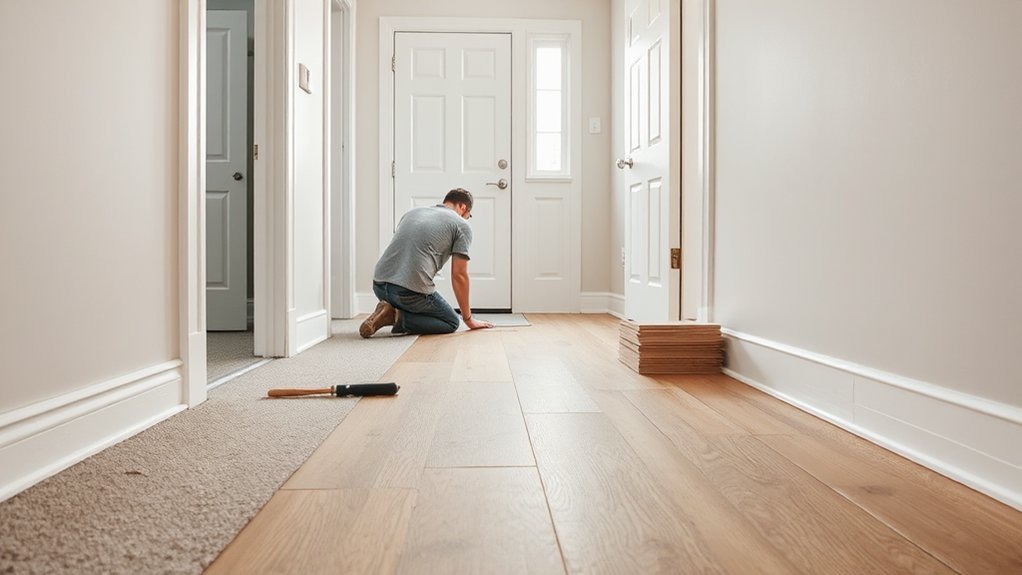
You’ll need to inspect hallways, kitchens, and living areas for worn thresholds, lifted edges, and deep scratches that’ll fail check-in scrutiny.
Choose hard-wearing options like LVT, laminate with a robust AC rating, or commercial-grade carpet tiles so you can meet UK rental expectations and reduce call-backs.
Plan a fast, clean install by measuring accurately, arranging waste disposal, and scheduling fitters to minimise tenant downtime.
Assess High-Traffic Damage
Where does your home take the most punishment day to day—hallways, the living room, the kitchen threshold, or the route from the front door to the stairs? Walk these lines like a tenant would on move-in day and note what undermines a Welcome feel.
In UK rentals, flooring faults quickly become Maintenance call-outs, so you’ll want clear evidence before you replace anything.
- Look for bald patches, frayed carpet edges, or worn patterns where feet pivot.
- Check for squeaks, springiness, or loose boards near doorways and stairs.
- Inspect scuffs, chips, and staining around radiators, kitchen units, and thresholds.
- Measure lipping, gaps, or lifting that could snag socks or breach safety expectations.
Photograph issues, mark locations, and prioritise hazards first.
Choose Durable Flooring Materials
How do you pick flooring that survives constant footfall without turning into a repair job every tenancy? Start by prioritising wear layers, impact resistance, and easy cleaning, especially in hallways, kitchens, and living rooms where tenants track grit and moisture.
Choose commercial-grade vinyl (LVT) or laminate with an AC4/AC5 rating for flats, and porcelain tiles for entrances.
In houses, consider engineered oak over softwood; it resists dents and can be refinished.
Specify slip resistance and moisture tolerance to meet UK expectations and reduce complaints.
For Eco friendly options, look for FSC-certified timber, recycled-content LVT, or natural linoleum.
Want aesthetic alternatives? Pick wood-look LVT or stone-effect porcelain to keep the finish smart and consistent throughout.
Plan Fast, Clean Installation
Durable flooring only pays off if you can fit it quickly and with minimal mess, so plan high-traffic replacements around short void periods and tight trade schedules. Aim for Fast installation by choosing click-fit LVT or laminate where possible, and pre-order trims, thresholds, and underlay to avoid delays.
For Quick upgrades, you’ll cut downtime by preparing the subfloor and keeping access clear for the fitter. Control dust and noise to protect neighbours and communal areas in flats. Keep the job tight and inspect before tenants move in:
- Lift and dispose of old flooring under council rules.
- Repair screed, fix squeaks, and level dips.
- Fit moisture barriers and acoustic underlay where required.
- Finish edges, seal transitions, and snag thoroughly.
Make Kitchen and Bath Durable, Clean, and Photo-Ready
Because kitchens and bathrooms take the hardest daily wear, you’ll get the best rental returns by making them tough, spotless, and easy to photograph.
Prioritise countertop upgrades in quartz or compact laminate; they resist stains and look sharp in Rightmove photos.
Pair that with cabinet refinishing rather than replacement: sand, prime, and paint in a warm white or soft grey, then fit brushed nickel handles for a modern, tenant-proof finish.
In the bath, regrout and reseal; replace tired silicone, and use mould-resistant products that meet UK humidity.
Swap in a thermostatic shower and a close-coupled, dual-flush loo to cut complaints and bills.
Finally, deep-clean, descale taps, fix extractor fans, and shoot photos in daylight with uncluttered worktops.
Frequently Asked Questions
What Improvements Increase Rent Value the Most Without Over-Renovating?
Boost rent most by prioritising Interior upgrades: refresh paint, fit durable flooring, modernise kitchen/bath fixtures, and improve energy efficiency (LEDs, insulation, EPC). Enhance Curb appeal with tidy landscaping, clean frontage, and secure, smart locks.
Should I Hire a Property Manager or Self-Manage My Rental?
You should hire a property manager if you’re remote, time-poor, or unfamiliar with UK compliance; self-manage if you’re local and organised. Use Vacation upgrades and landscaping tips strategically, but prioritise inspections, arrears control, and repairs.
What Documents and Disclosures Are Required Before Listing a Rental?
Prepare paperwork promptly: EPC, Gas Safety Certificate, EICR, deposit prescribed information, How to Rent guide, right-to-rent checks, privacy notice, and tenancy agreement. You’ll guarantee Legal compliance, add Maintenance tips, and provide local licensing disclosures before advertising.
How Should I Screen Tenants Legally and Fairly?
Run consistent Tenant screening: get written consent, verify Right to Rent, references, income, credit. Apply identical criteria for all applicants under Fair housing principles, record decisions, avoid discriminatory questions, and use reputable UK agencies.
What Insurance Changes Do I Need When Converting to a Rental?
Like swapping captain’s hat for landlord’s, you must tell your insurer and replace owner-occupier cover with landlord Insurance policies. Add liability, loss-of-rent, and legal expenses; review Coverage adjustments for contents, buildings, and accidental damage.
Conclusion
Getting your home rental-ready is like readying a ship for the Channel: you don’t set sail on good paint alone—you check the hull, electrics, plumbing, and boiler, then fix the leaks passengers spot first. You scrub out every lingering smell, brighten tired rooms with better lighting and hardware, and lay hard-wearing flooring where feet will pound. Make kitchen and bath surfaces clean, durable, and photo-ready, and you’ll dock dependable tenants sooner.