
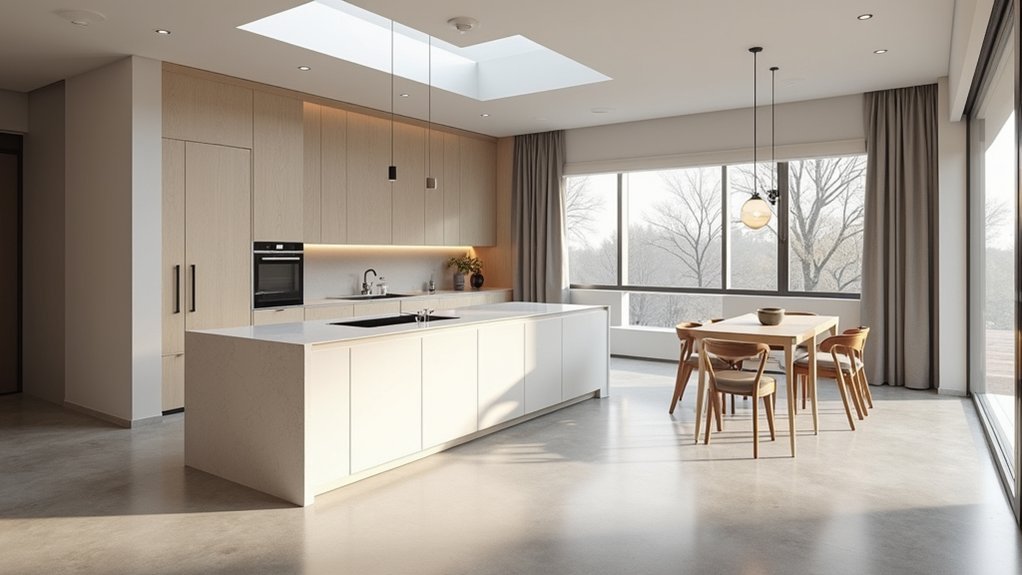
Like the move from closed-off galley kitchens to today’s great rooms, 2025 value gains come from updates that buyers can measure. You’ll get the best ROI by opening sightlines where it’s structural-safe, refacing cabinets instead of replacing, choosing quartz over niche stone, and upgrading to layered LED plus Energy Star or smart appliances. Add storage tricks and light-reflective neutrals to make square footage feel bigger—but which single change typically moves the needle most in your price range?
Key Takeaways
- Prioritize midrange, high-ROI updates: cabinet refacing, modern hardware, durable quartz-look counters, and a timeless backsplash.
- Upgrade lighting with layered LEDs: slim recessed 3000K, under-cabinet strips, pendants on dimmers, and motion-sensor toe-kick lighting.
- Choose ENERGY STAR, quiet appliances; consider induction and smart safety features like leak alerts and auto shutoff for buyer appeal.
- Keep layout changes minimal; improve flow with an island work triangle, 42–48 inch walkways, and continuous flooring to boost perceived space.
- Add storage that sells: ceiling-height cabinets, deep drawers, pull-out pantry units, and corner solutions to increase usable space and reduce clutter.
Kitchen Renovation Upgrades With the Best ROI
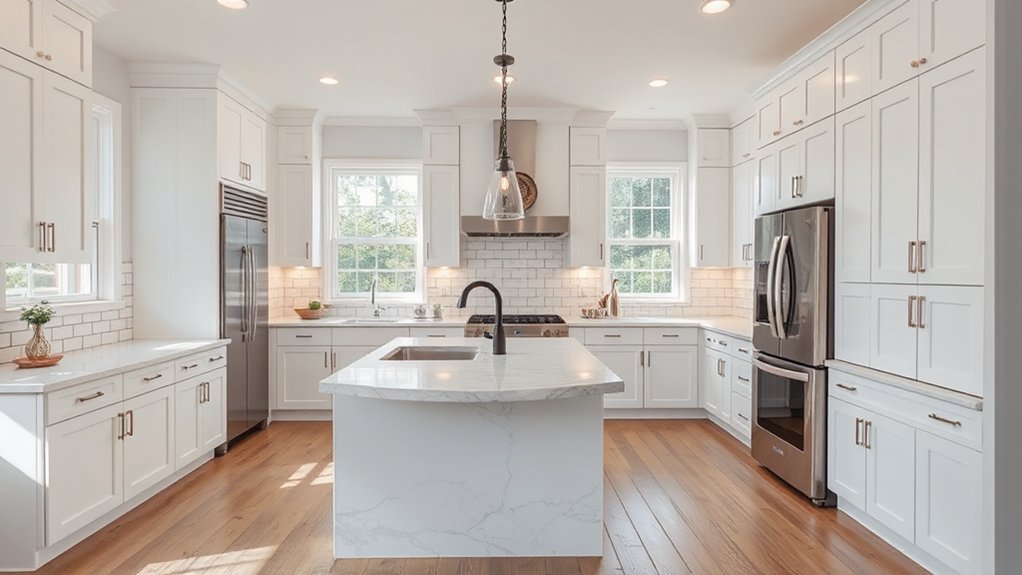
While a full gut remodel can look impressive, the best kitchen ROI usually comes from targeted upgrades that modern buyers notice immediately—think refreshed cabinet fronts, durable midrange countertops, efficient lighting, and updated hardware.
National ROI reports routinely rank minor kitchen updates among the top interior projects, often recouping roughly 70%–85% at resale. You’ll boost perceived value by switching to LED layers (task, ambient, accent) and adding under-cabinet lighting that photographs well for listings.
Choose eco-friendly materials—low-VOC paint, FSC-certified wood, and recycled-content surfaces—to match 2025 buyer preferences for healthier homes.
Add Smart appliances only where they signal everyday convenience: a Wi‑Fi range with safety shutoff or a quiet, efficient dishwasher.
Keep finishes cohesive, and you’ll sell faster.
Kitchen Renovation Budget: Costs, Splurge vs Save
ROI-friendly upgrades only pay off if the numbers work, so set a clear kitchen renovation budget before you pick finishes. In 2025, midrange remodels still tend to recoup more than luxury overhauls, so anchor Budget planning to comps in your ZIP code and cap spending near 5–15% of home value. Expect big-ticket costs from labor, cabinets, countertops, and appliances; protect ROI by reserving 10–15% for surprises.
- Splurge: durable cabinets with soft-close hardware
- Splurge: energy-efficient appliances buyers notice on listings
- Save: quartz-look or midgrade counters over exotic stone
- Save: refreshed lighting and hardware instead of custom millwork
- Save: keep existing plumbing fixtures for Cost reduction
Get three bids, line-item everything, and track weekly to avoid creep.
Kitchen Renovation Layouts Buyers Prefer in 2025
In 2025, you’ll get stronger buyer appeal when you design an open-concept layout with clear flow zones for cooking, prep, dining, and entertaining.
You can boost perceived space and functionality by anchoring the plan with an island-centered work triangle that shortens steps and adds seating.
This layout strategy aligns with current market preferences and helps protect resale ROI by making the kitchen feel bigger, faster to use, and easier to gather in.
Open-Concept Flow Zones
- Keep 42–48 inches of main walkways for two-way passing
- Align sightlines to windows; avoid tall blocks in view corridors
- Use continuous flooring to unify zones and boost visual square footage
- Add task lighting per zone to cut shadowy, cramped corners
- Place storage at zone edges so guests don’t cross your workflow
Island-Centered Work Triangle
Once you’ve opened up flow zones and protected clear sightlines, the island becomes the control center that buyers expect in 2025—especially when it anchors a tight work triangle between the sink, range, and fridge. You’ll get faster prep, fewer steps, and a layout that photographs well for listings.
Aim for an island centered work triangle with 4–7 feet between stations, and keep total triangle distance near 13–26 feet to support culinary ergonomics.
Add a prep sink or microwave drawer on the island only if you can preserve 42–48 inches of circulation on primary paths.
Buyers increasingly rank storage and task lighting as must-haves, so pair the island with deep drawers, outlets, and layered pendants. This configuration boosts perceived functionality, helping your remodel compete and protect resale margins.
Kitchen Cabinets: Refacing vs Replacing for Value
While countertops and appliances grab attention, your cabinets typically drive the biggest perceived “before-and-after” impact for the dollars you spend. If your boxes are solid, refacing techniques often deliver the best ROI: you keep the layout, update doors, veneer, and hardware, and cut labor waste—usually 30–50% cheaper than full replacement.
Replace when you need structural fixes, better storage, or a new footprint; that higher cost can pay off if it solves daily-function problems buyers notice in walk-throughs.
- Choose durable cabinet material (plywood over particleboard) for longevity
- Reface when frames are square and shelves aren’t sagging
- Replace if you’re adding pullouts, pantries, or correcting poor heights
- Favor slim Shaker, warm woods, and matte finishes trending in 2025
- Price bids by linear foot and demand soft-close hinges
Kitchen Countertops Worth Buying in 2025
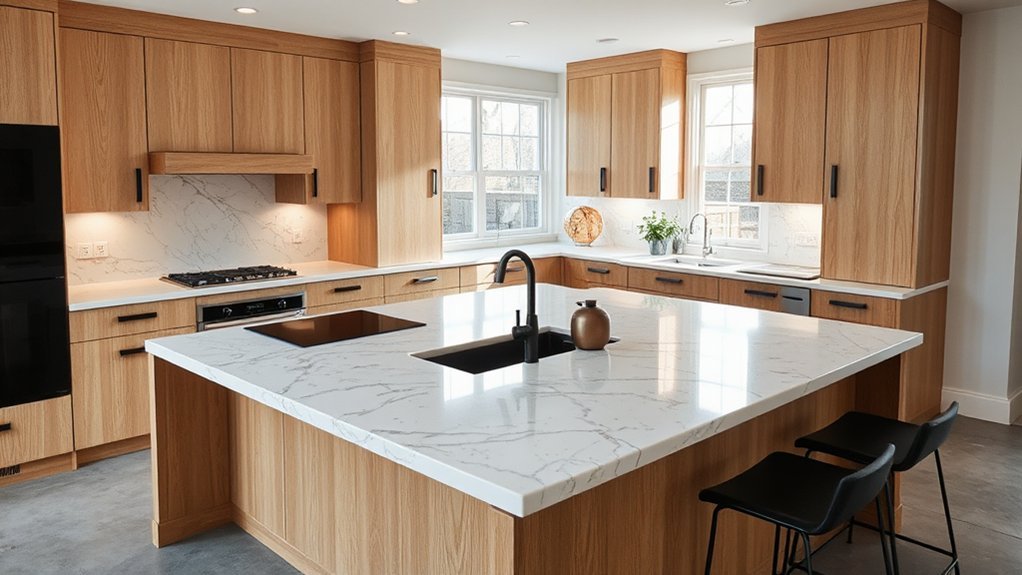
Cabinets set the visual baseline, but countertops often tip a kitchen from “updated” to “premium” in a buyer’s mind—and they’re one of the clearest places to buy durability with your budget.
In 2025, engineered quartz leads ROI because Quartz durability delivers low maintenance, consistent patterns, and fewer stain or etch callbacks than natural stone. Choose 2–3 cm slabs with subtle veining for a high-end look without luxury risk.
If you want natural stone cachet, follow Marble trends by using honed finishes, thicker edges, or marble-look quartz in perimeter runs. Then reserve real marble for a small island or baking zone. That strategy protects resale by limiting sealing and damage concerns.
Also price in fabrication: simple edge profiles and fewer seams can save 10–20% and keep value tight.
Kitchen Renovation Lighting That Modernizes Fast
- Swap dated domes for slim recessed or low-profile surface mounts
- Add under-cabinet accent illumination for a high-end glow
- Install pendants over islands with consistent spacing and scale
- Use dimmers everywhere; buyers notice glare instantly
- Add motion-sensing toe-kick lighting for safety and polish
Energy-Efficient Kitchen Appliances That Pay Back
Because appliances quietly drive a big share of a kitchen’s utility spend, upgrading to energy-efficient models can return real cash—not just a nicer look. Start with ENERGY STAR refrigerators and dishwashers; they can cut electricity and water use, lowering annual bills while signaling “low-cost to run” to buyers in 2025.
Next, choose an induction range: you’ll typically boil water faster than gas and waste less heat, which can trim HVAC load too. Pair it with a variable-speed range hood to move air with fewer watts.
Smart appliances add payback by shifting cycles to off-peak rates and alerting you to failing seals or clogged filters before they spike usage. If you’ve got solar or a battery, schedule loads to match renewable energy for extra savings and resiliency.
Kitchen Flooring That Survives Kids, Pets, Spills
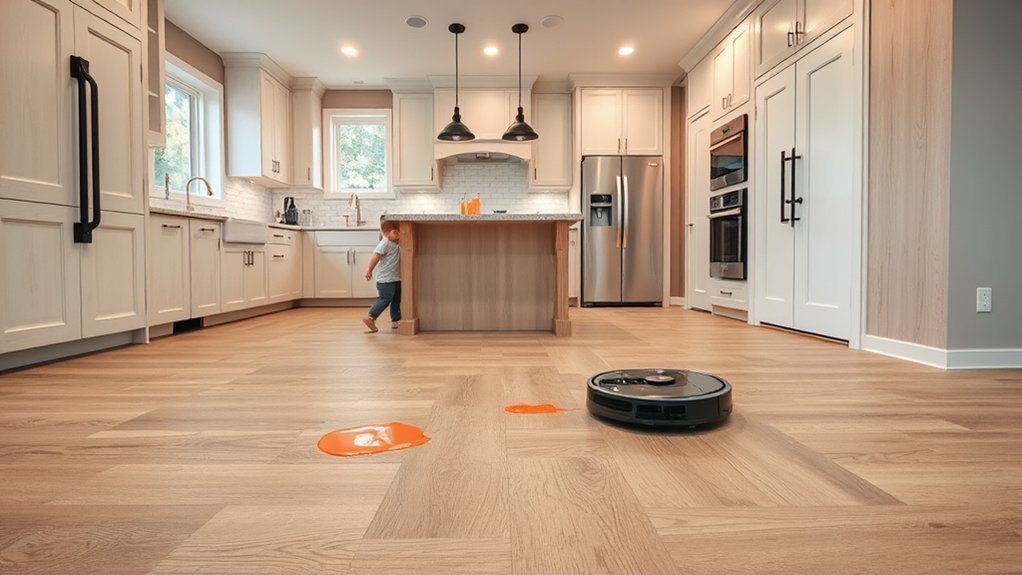
While backsplash trends come and go, your kitchen floor takes the daily beating—spills, dropped pans, pet claws, and toy traffic—so durability should drive the spec. In 2025, buyers reward durable flooring that looks premium yet handles chaos; real estate surveys keep kitchens as top value drivers, and floors read as “new” fast.
Choose kid-proof surfaces with waterproof cores and tough wear layers to reduce replacement risk and boost appraisal photos.
- Waterproof luxury vinyl plank (20+ mil wear layer)
- Porcelain tile with high DCOF slip rating
- Matte-finish engineered hardwood with aluminum-oxide topcoat
- Stain-resistant grout (epoxy or pre-sealed)
- Resilient underlayment to cut noise and dents
Skip glossy finishes; they show scratches and lower perceived quality.
Small Kitchen Renovation Ideas That Feel Bigger
If your kitchen’s small, you can make it feel larger by prioritizing space-saving storage that reduces countertop clutter and boosts daily efficiency. You’ll see strong ROI from high-impact upgrades like ceiling-height cabinets, pull-out pantries, and drawer organizers—features that rank high on today’s buyer wish lists.
Then you can amplify the footprint with light-boosting moves such as brighter layered lighting, reflective finishes, and lighter color palettes that visually expand the room without changing the layout.
Space-Saving Storage Solutions
Even in a tight footprint, you can make a small kitchen feel dramatically larger by treating storage as a measurable upgrade: more usable cubic inches, less counter clutter, and faster workflows. Buyers track function, and 2025 comps reward kitchens that store more without expanding square footage.
- Add ceiling-height cabinets to capture 10–20% more vertical volume.
- Install pull-out pantries and tray dividers to cut “search time” and reduce duplicates.
- Use corner turntables or LeMans units to reclaim dead zones.
- Build hidden compartments in toe-kicks and false fronts for rarely used gear.
- Choose fold away tables or slide-out worktops so prep space appears only when needed.
These upgrades photograph cleanly, show well at open houses, and often cost less than layout changes while boosting perceived capacity and resale appeal.
Light-Boosting Design Upgrades
Because light reads as square footage in listing photos and showings, you’ll get more “looks bigger” impact per dollar by upgrading illumination than by moving walls.
Layer lighting: add slim recessed LEDs (3000K), under-cabinet strips, and a bright ceiling fixture on separate dimmers, so the space photographs evenly with fewer shadows.
Max out natural light by swapping heavy window treatments for solar shades or tailored sheers that preserve privacy without blocking glass. If you can, enlarge a window or add a transom; even a 10–15% boost in daylight can change how buyers perceive depth.
Choose high-LRV paint, glossy backsplash tile, and light-reflective quartz to bounce lumens.
Put toe-kick lighting on a motion sensor for a premium, high-ROI detail in 2025.
Frequently Asked Questions
Do I Need Permits for a Value-Boosting Kitchen Renovation in 2025?
You likely do if you change plumbing, electrical, walls, or HVAC; cosmetic upgrades often don’t. Check local permit requirements early—renovation permits prevent fines, speed resale, and protect ROI with code-compliant inspections.
How Long Should a Kitchen Renovation Take to Avoid Resale Disruption?
To avoid resale disruption, you should target a 6–10 week renovation timeline; 8 weeks is the sweet spot. You’ll protect ROI by preordering materials, limiting layout changes, and following design trends that buyers track.
Will an Open-Concept Kitchen Hurt Value in Neighborhoods With Older Homes?
It won’t necessarily hurt value, but it can if you ignore neighborhood compatibility. Buyers in older-home areas often prefer defined rooms; open concept drawbacks include noise, lost storage, and costly structural changes, reducing ROI.
Which Renovations Add Value but Risk Dating the Kitchen Quickly?
Renovations like Trendy appliances and Bold color schemes can add value but date fast; 64% of buyers prefer neutral kitchens. You’ll boost short-term wow, yet you’ll risk lower ROI when tastes shift. Choose timeless bases.
Should I Renovate Before Listing, or Offer a Buyer Renovation Credit?
Renovate if you can deliver turnkey appeal; offer a credit if timelines or budgets are tight. Data shows buyers discount uncertainty. Follow Kitchen design trends and prioritize appliance upgrades for stronger ROI and faster offers.
Conclusion
You don’t need a gold-plated faucet to “add value” in 2025—unless you’re auditioning for a home-flip reality show. Buyers reward the boring wins: open flow, quartz, cabinet refacing, layered LED lighting, and Energy Star or smart appliances that cut bills. Max out storage, bounce light with pale finishes, and choose floors that outlive kids and pets. Spend where comps prove ROI, save where Instagram just wants drama.