
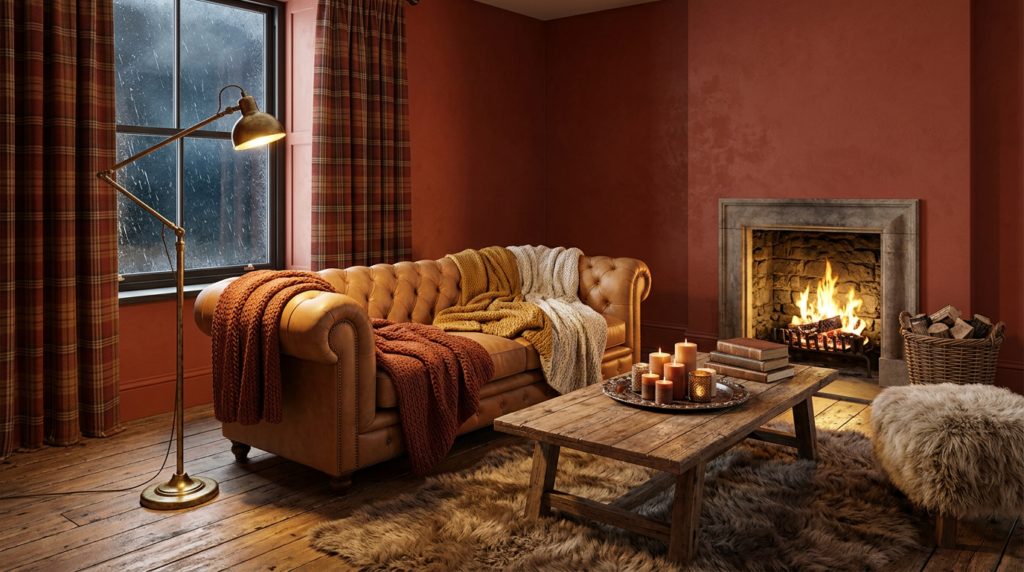
If you want your home to feel cosy, you can’t rely on soft furnishings alone—you need colour that works with your light, room size, and undertones. Start with creamy off-whites, muted terracotta, or gentle cinnamon, then decide where a deeper shade should sit so it adds depth without closing the space in. Once you see how these tones shift from morning to evening, you’ll know what to change next.
Pick Warm Colours by Light, Size, and Undertones
Although warm colours instantly make a room feel inviting, you’ll get the best result when you choose them based on your space’s light, size, and undertones.
Start by watching the room through the day: north-facing light can turn warm paint muddy, so lean toward clearer terracottas or peachy beiges; south-facing light tolerates deeper ochres and clay.
In small rooms, keep warmth light to mid-tone so walls don’t close in; use richer warm shades as accents or on a single surface.
Next, read undertones: if flooring skews yellow, pick paints with subtle pink or red to balance; if it skews red, choose warmer neutrals with a touch of golden.
Always test swatches on multiple walls.
Warm Living Room Colours That Feel Cosy
When you want your living room to feel truly cosy, start with warm, grounding wall colours that soften the space and make seating areas feel more intimate. Try creamy off-whites with yellow undertones, warm greige, or soft clay to keep the room bright without turning chilly. A lovely fireplace works well here.
If you’ve got strong daylight, richer shades like terracotta, cinnamon, or toasted caramel add depth and make the sofa zone feel inviting. In smaller rooms, choose a mid-tone and keep the trim slightly lighter so edges don’t close in.
You can also paint one wall a deep russet or cocoa to anchor the room and highlight artwork. Finish with warm metals, oak, and textured fabrics to reinforce the glow.
Warm Bedroom Colours for a Snug Feel
Because your bedroom should feel like a calm retreat, start with warm, muted hues that soften the light and help the space feel snug. Try clay, terracotta blush, or dusty rose on walls for instant warmth without glare.
If you want something deeper, choose cinnamon, merlot, or tobacco on a single accent wall behind the headboard to anchor the room.
Balance richer tones with creamy whites, oatmeal, or warm greige on trim and ceilings so the space stays airy. Layer in texture: caramel wood, linen bedding, and brass or aged-gold hardware amplify the cosy palette.
Keep lighting warm (2700K) and add dimmers so your paint reads soft at night. Finish with rust, ochre, or olive cushions to tie everything together.
Warm Kitchen and Dining Colours That Flatter Food
Carry that same cosy warmth out of the bedroom and into the heart of the home, where colour can make meals look as good as they taste. Choose soft terracotta, paprika, or muted coral on walls to enhance golden crusts, roasted veg, and tomato sauces without shouting. Warm off-whites (cream, oatmeal) keep cabinets bright while still flattering bread and pastries.
In dining areas, try cinnamon, clay, or honey-toned paint to deepen candlelight and make greens and berries pop. Pair these hues with natural wood, brass, and linen for an easy, appetising palette.
If you’re colour-shy, add warmth through a rust runner, amber glassware, or ochre bar stools, and keep surfaces matte so food stays the focus.
Warm Entryway Colours for a Welcoming First Look
Although your entryway may be small, warm colour makes it feel instantly inviting and sets the tone for the rest of your home. Try buttery yellow to catch daylight and brighten gloomy mornings.
Go for terracotta or clay to add grounded warmth that hides scuffs from shoes and bags. If you want something richer, choose cinnamon, rust, or deep coral to create a confident first impression without feeling formal.
Paint the door in a warm red-brown for instant character, or use a peachy tone on the walls to soften sharp corners.
Carry the hue onto trim, a bench, or a built-in to make the space feel considered.
Finish with warm metal hooks and amber lighting so guests feel welcomed.
How to Balance Warm Colours With Neutrals and Contrast
When you mix warm colours with the right neutrals and a touch of contrast, the space feels cosy instead of crowded. Start by picking one warm lead shade—terracotta, mustard, or deep blush—then anchor it with a calm neutral like warm white, greige, taupe, or sand.
Use the 60-30-10 rule: neutrals cover most surfaces, warm colour supports it, and contrast finishes it. Add contrast through matte black hardware, dark walnut, or inky navy textiles to sharpen edges and prevent everything from blending.
Keep undertones consistent: pair orange-based warms with creamy neutrals, and red-based warms with beige or mushroom. Break up big warm areas with light trim, pale rugs, and airy curtains.
Conclusion
You can make any room feel cosy when you choose warm colours that suit your light, space, and undertones. Let creamy off-whites, soft terracotta, and gentle cinnamon set the mood, then add deeper accents where you want extra depth. In living rooms, bedrooms, kitchens, and entryways, pair those hues with natural wood, warm metals, and textured fabrics. Balance everything with calm neutrals, layered lighting, and soft textiles, so your home always feels welcoming.